
In Florida, vehicle crash statistics for 2023 show that approximately 394,219 traffic crashes were reported statewide, resulting in more than 251,000 injuries and around 3,400 fatalities, making Florida one of the deadliest states for roadway accidents in the country. Alcohol-impaired driving remained a major factor, contributing to hundreds of fatal crashes, while speeding, distracted driving and failure to wear seatbelts continued to play significant roles in serious and deadly collisions. Pedestrian fatalities remained especially high, with nearly 780 pedestrian deaths, while motorcycle fatalities exceeded 600 deaths, highlighting the risks faced by vulnerable road users. Urban areas accounted for the majority of fatal crashes due to dense traffic, tourism and major interstate corridors such as I-95, I-4 and I-75, although rural highways continued to experience severe high-speed accidents. Hit-and-run crashes also remained a major issue statewide, with over 105,000 hit-and-run incidents reported during the year. Overall, risky driving behaviours, congestion and high traffic volume continue to contribute heavily to roadway injuries and fatalities across Florida.
In Florida in 2023, passenger car occupants were involved in 879 fatalities, accounting for about 26% of all traffic deaths statewide.

Motorcycle crashes resulted in 667 fatalities, making up approximately 20% of Florida's total traffic fatalities.

Light trucks and SUVs were involved in 700 fatalities, representing around 21% of all traffic deaths.

Fatalities involving buses or public transportation vehicles were very low and are included within the "other" category, contributing only a small fraction of total deaths statewide.

Crashes involving semi or large truck occupants led to 39 fatalities, accounting for about 1% of Florida's traffic deaths.
Pedestrian crashes caused 771 fatalities, comprising approximately 23% of all traffic deaths in Florida in 2023.



Frequently ranked as one of the deadliest highways in the United States, I-4 runs between Tampa and Daytona Beach through Orlando. Heavy tourism traffic, congestion, speeding and distracted driving contributes to extremely high crash and fatality rates.


Stretching the length of Florida, US-1 is known for dangerous intersections, pedestrian crashes, motorcycle accidents and heavy urban traffic, especially in South Florida and the Florida Keys.


One of Florida's busiest highways, I-95 experiences severe congestion, aggressive driving, high-speed crashes and frequent fatal multi-vehicle accidents, particularly in Miami, Fort Lauderdale and Jacksonville.

Running north-south through Florida, I-75 sees heavy truck traffic, tourist travel, and dangerous weather conditions. Fatal crashes are common near Tampa, Gainesville and Alligator Alley.

Often cited as one of Florida's most dangerous roads due to high pedestrian fatality rates, frequent intersections, commercial congestion and heavy local traffic, especially around the Tampa Bay area.
Single vehicle fatal car accidents occur in rural and suburban parts of Florida.
of fatal car accidents in Florida happen in rural areas.

Multiple vehicle fatal car accidents occur in urban interstate corridors around Miami, Orlando, Tampa and Jacksonville.
of fatal car accidents in Florida happen in urban areas.


A car accident can be overwhelming and stressful, even if it's minor. Knowing what steps to take immediately afterward can help protect your health, your legal rights, and your financial interests. Here are five essential things to do after an accident:
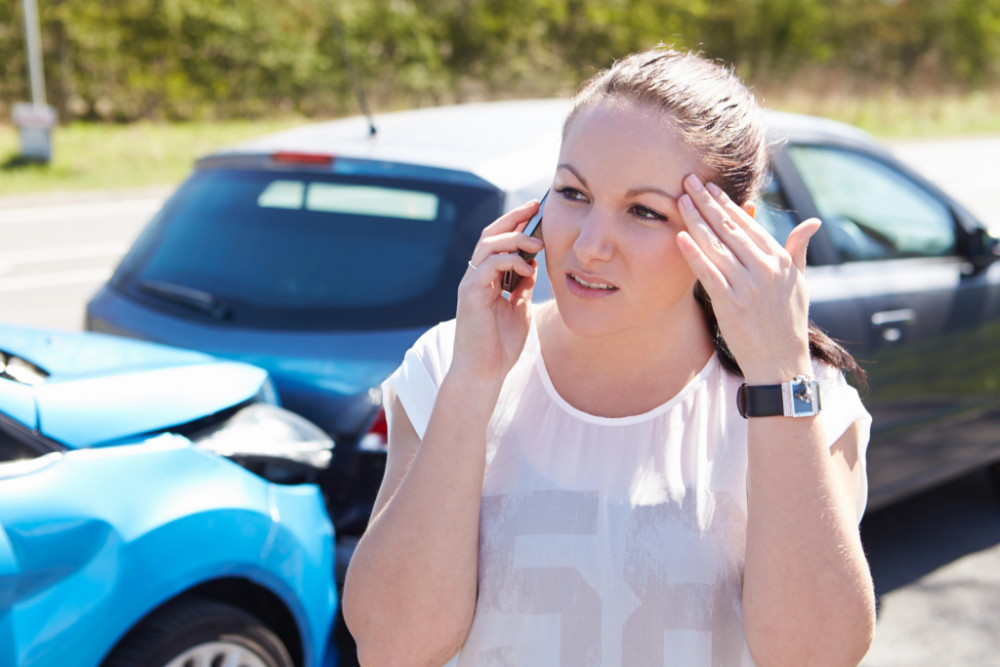

Your safety comes first. Check yourself and others for injuries and call 911 immediately if anyone is hurt. Even if injuries seem minor, it's important to get medical attention, as some symptoms may not appear right away. If possible, move to a safe location away from traffic while waiting for help to arrive.

Always report the accident to the police. An official police report creates an objective record of what happened, which can be critical for insurance claims and legal matters. Cooperate with the officer, provide accurate information, and avoid admitting fault at the scene.

If it's safe to do so, gather as much information as possible. Take photos or videos of the vehicles, damage, license plates, road conditions, traffic signs, and any visible injuries. Exchange contact and insurance information with the other driver(s) and attempt getting contact details from any witnesses in the area.

Even if you feel fine, consider seeing a medical professional as soon as possible. Injuries such as whiplash, concussions, or soft-tissue damage can take hours or days to show symptoms.

Report the accident to your insurance provider promptly and provide them with accurate details. Stick to the facts and avoid speculation. Keep copies of all documents related to the accident, including medical bills, repair estimates, and correspondence with insurers.

The No Driving Through a Playground Law: In the state of Florida, it is illegal to drive a motor vehicle through a designated public playground area on public property. This law applies to all motorized vehicles like mopeds and scooters and even e-bikes. Using a public playground as a convenient shortcut is not only dangerous; it is highly illegal and can result in fines and criminal charges.
The Singing in a Swimsuit Law: In Sarasota, Florida, it is illegal to sing in a public place while wearing a swimsuit. While this has absolutely nothing to do with driving a motor vehicle, it is a very unusual ordinance that should be noted by anyone planning to visit the city.
Animal Parking Law: If you leave your horse, goat or any other type of large animal at a designated paid parking area, Florida law requires you to pay the parking fee just as if you had parked your car.
The Dozing at a Drive-Through Law: In Florida, it is illegal to fall asleep in your motor vehicle while waiting in a drive-through line on a public road or in a public parking lot. Florida’s HB 1365 prohibits sleeping in vehicles on public property unless you are in a designated camp site. If you are caught asleep behind the wheel while the engine is running or while the keys are in the ignition, you may be prompted to take a DUI test to determine if you are intoxicated. Florida law apparently takes a very dim view of drive-through napping and considers it a potential public safety hazard worthy of official legal attention.
The No Driving While Fatigued Law: In Florida, it is illegal to operate a motor vehicle on a public road while in a state of extreme fatigue or drowsiness that significantly impairs the driver's ability to safely control the vehicle. The state takes drowsy driving extremely seriously, particularly given the state's status as one of the most popular long distance road trip destinations in the entire United States and actively enforces its fatigued driving laws to ensure that Florida's extensive and heavily traveled public road network remains as safe for all road users.
The Golf Cart on Public Roads Law: In Florida, golf carts are legally permitted to operate on certain public roads and streets in designated communities and retirement villages, provided they are properly equipped with the required safety features, including headlights, taillights, turn signals and reflective devices. Florida is home to a large number of retirement communities like The Villages, where golf carts traveling on public roads is an integral and legally recognized part of daily life.
The No Street Racing Law: Under Florida Statute Section 316.191, it is strictly illegal to participate in or organize any form of motor vehicle racing or speed competition on a public road or highway. Street racing is inherently dangerous not only to the drivers but also to the surrounding public; for this reason, Florida takes a proactive role to discourage and enforce street racing laws. Violators are often faced with significant penalties, including substantial fines, mandatory license suspension and potential vehicle impoundment.
The Boat Trailer Law: In Florida, drivers are legally required to ensure that any boat trailer being towed behind a motor vehicle on a public road is properly registered, equipped with functioning lights and secured with appropriate safety chains. Given the fact that the state of Florida is one of the most popular boating states in the entire country, with millions of registered boats and boat trailers operating on Florida public roads throughout the year, this law is considered one of the most practically important and frequently enforced traffic safety regulations in the state.
The No Driving Through a Flooded Road Law: In Florida, drivers are strongly discouraged and in certain circumstances, legally prohibited from driving through flooded roads and intersections, most commonly during and after severe weather events. Given Florida's status as one of the most flood-prone states in the entire country, with commonly occurring tropical weather events like hurricanes and storms, this law reflects the critical importance of keeping Florida drivers safe. Floodwaters can be significantly deeper and more dangerous than they appear from the driver's seat.
The Headlight Requirement Law: Under Florida Statute Section 316.217, all drivers are required to turn on their vehicle's headlights between sunset and sunrise and whenever visibility is reduced due to weather conditions such as rain, fog or smoke. Florida is one of the few states that specifically requires drivers to turn on their headlights whenever their windshield wipers are in use, making it one of the most comprehensive and strictly enforced headlight requirement laws in the entire country. While this may appear to be a trivial law, it is particularly important during Florida's afternoon thunderstorm season when sudden and severe rain squalls can dramatically reduce visibility on public roads in a matter of seconds.
No Driving over Graves: In Florida, it is illegal to drive a vehicle over graves in a cemetery. It is an oddly specific law that makes one wonder what the motivating factors were that propelled this piece of legislation.
Driving Too Slow: While speeding is heavily penalized, driving too far below the speed limit is also categorized as a driving offense in the state of Florida. On most interstates, driving below the speed of 50 MPH is considered a violation as it can impede the flow of normal traffic and create congestion. The law does allow for one exception during various weather events: heavy rain, smoke, fog, strong winds and flooding.