

In Georgia, vehicle crash statistics for 2023 show that approximately 385,000 traffic crashes were reported statewide, resulting in more than 1,700 fatalities and tens of thousands of injuries. Speeding, distracted driving, and alcohol-impaired driving remained among the leading causes of serious and fatal crashes across the state. Pedestrian and motorcycle fatalities also continued to rise, particularly in densely populated urban areas such as Atlanta and along major interstate corridors. Single-vehicle roadway-departure crashes accounted for a significant share of fatal accidents, especially on rural highways and high-speed roads. Major interstates including I-75, I-85 and I-20 experienced frequent multi-vehicle collisions due to heavy commuter traffic and freight transportation. Rural areas recorded a disproportionately high number of fatal crashes because of higher travel speeds, limited lighting and longer emergency response times. Overall, unsafe driving behaviors such as impaired driving, aggressive driving, distracted driving and failure to wear seatbelts continued to contribute heavily to roadway injuries and fatalities throughout Georgia.
In Georgia in 2023, passenger cars were involved in 508 traffic fatalities, accounting for approximately 31% of all roadway deaths in the state.
Motorcycle crashes resulted in 196 fatalities, making up roughly 12% of all traffic-related deaths statewide.
Light trucks and SUVs, including pickup trucks and vans, were involved in 488 fatalities, representing about 30% of Georgia's total traffic fatalities.

Fatalities involving buses or public transportation vehicles were very limited in 2023 and are included within the other road user category, which accounted for 23 deaths, or about 1% of all traffic fatalities.
Crashes involving semi-trucks and other large commercial vehicles led to 25 fatalities, contributing about 2% of the state's total traffic deaths.
Pedestrians were involved in 310 fatal crashes, accounting for approximately 19% of Georgia's traffic fatalities, highlighting a significant risk for non-motorized road users.



Commonly known as "The Perimeter, "I-285 is considered Georgia's most dangerous highway due to heavy congestion, aggressive driving, frequent lane changes and high-speed multi-vehicle crashes around Atlanta.


One of Georgia's busiest north-south corridors, I-75 experiences heavy truck traffic, commuter congestion and numerous fatal crashes, especially near Atlanta and Macon.


Running east-west through Atlanta and rural Georgia, I-20 is known for speeding, truck-related crashes and severe multi-vehicle accidents.

Famous for high pedestrian fatality rates, dangerous intersections, and dense urban traffic in the Atlanta metro area. Pedestrian accidents are especially common along this corridor.

A major interstate connecting Atlanta to northeastern Georgia. Heavy commuter traffic, speeding, and congestion contribute to frequent severe collisions and fatal crashes.
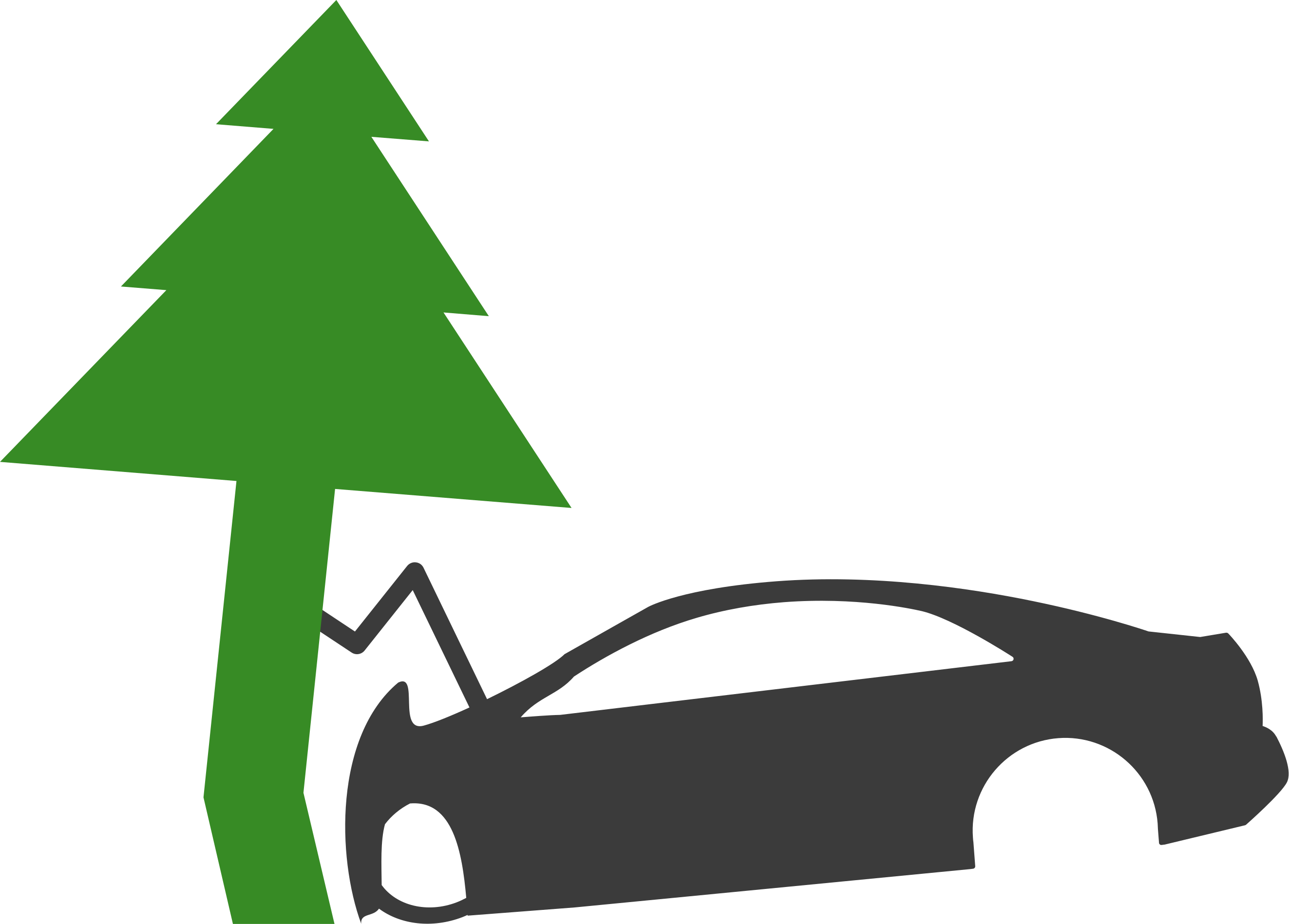
Single vehicle fatal car accident occurs in rural and suburban areas around Columbus, Macon and southern Georgia.
of fatal car accidents in Georgia happen in rural areas.

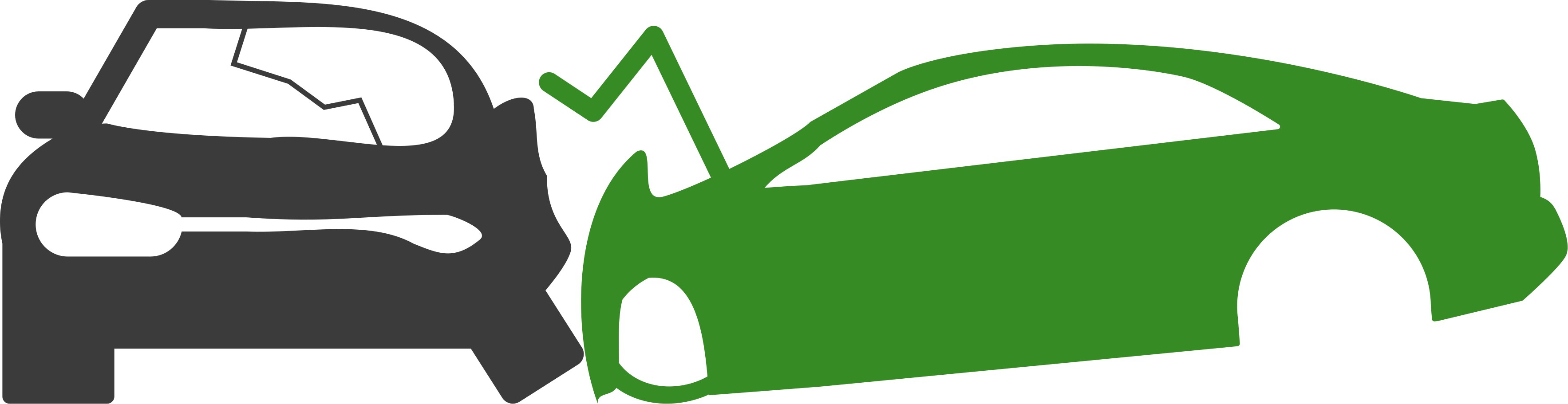
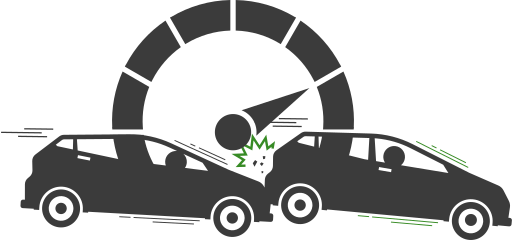
Multiple vehicle fatal car accidents occur in metro Atlanta due to heavy commuter traffic, frequent lane changes and interstate congestion.
of fatal car accidents in Georgia happen in urban areas.


A car accident can be overwhelming and stressful, even if it's minor. Knowing what steps to take immediately afterward can help protect your health, your legal rights, and your financial interests. Here are five essential things to do after an accident:


Your safety comes first. Check yourself and others for injuries and call 911 immediately if anyone is hurt. Even if injuries seem minor, it's important to get medical attention, as some symptoms may not appear right away. If possible, move to a safe location away from traffic while waiting for help to arrive.

Always report the accident to the police. An official police report creates an objective record of what happened, which can be critical for insurance claims and legal matters. Cooperate with the officer, provide accurate information, and avoid admitting fault at the scene.

If it's safe to do so, gather as much information as possible. Take photos or videos of the vehicles, damage, license plates, road conditions, traffic signs, and any visible injuries. Exchange contact and insurance information with the other driver(s) and attempt getting contact details from any witnesses in the area.

Even if you feel fine, consider seeing a medical professional as soon as possible. Injuries such as whiplash, concussions, or soft-tissue damage can take hours or days to show symptoms.

Report the accident to your insurance provider promptly and provide them with accurate details. Stick to the facts and avoid speculation. Keep copies of all documents related to the accident, including medical bills, repair estimates, and correspondence with insurers.

The No Spitting on the Sidewalk Law: In the city of Marietta in the state of Georgia there is municipal legislation on the books prohibiting spitting on the sidewalk or on any public road or street within the city limits. While most people would consider refraining from public sidewalk spitting to be basic common courtesy rather than a legal requirement, the fact that Marietta city law had to specifically address the issue suggests that this was once a pressing enough public health and community cleanliness concern in the city to warrant its very own dedicated piece of Marietta municipal legislation that remains on the books to this very day.
The No Driving Through a Playground Law: In Georgia, it is illegal to drive a motor vehicle through a designated public playground area on public property. This law includes any type of motorized scooters and e-bikes. While most people would never consider cutting through a playground to save a couple of minutes on their commute, the fact that this Georgia state law was enacted suggests that someone somewhere in the Peach State once believed that using a public playground as a convenient shortcut was a perfectly reasonable thing to do.
The No Cursing in Front of a Dead Body Law: Under Georgia Code Title 43 Chapter 18 Section 46, it is illegal to use profane or offensive language in front of a dead body in a funeral home or mortuary. This law takes under account the high regard the state has towards the deceased family in morning.
The No Fishing from a Moving Vehicle Law: According to Georgia hunting laws, it is illegal to fish from a moving motor vehicle on a public road or highway. One can only imagine the extraordinarily optimistic and deeply creative series of events that led Georgia lawmakers to feel the need to specifically address the issue with this specific legislation.
The No Driving While Eating Law: In Georgia, while there is no specific law explicitly prohibiting eating while driving, often law enforcement officers can and do issue distracted driving citations to motorists who are observed eating behind the wheel.
The Slow Driver Law: Under Georgia Code Section 40-6-40, it is illegal to drive significantly below the posted speed limit in the left lane of a public highway or interstate in a manner that impedes the normal flow of traffic. On multi-lane streets and highways, the left lane is reserved for passing traffic and local law enforcement will pull over sight violators. This law is commonly referred to as Georgia's slowpoke law and is specifically targeting left lane drivers who travel below the speed of traffic and create traffic congestion on Georgia's busy interstate highway system. The state of Georgia is one of the most aggressively enforced slowpoke law states in the entire country.
The No Driving an Unsafe Vehicle Law: Under Georgia state traffic law it is illegal to operate a motor vehicle that is in an unsafe mechanical condition on a public road or highway. Georgia law enforcement officers have the authority to pull over and inspect any vehicle they believe to be mechanically unsafe, and drivers found operating unsafe vehicles can face significant fines and be required to immediately remove their vehicle from public roads until all necessary mechanical repairs have been completed.
The Railroad Crossing Law: under Georgia Code Section 40-6-140, all drivers are required to come to a complete stop at railroad crossings when a train is approaching or when crossing signals are activated. Recognizing the extraordinarily dangerous and potentially fatal consequences of a collision between a motor vehicle and a freight train, the state of Georgia takes its railroad crossing laws extremely seriously and enforces them with significant penalties for drivers who attempt to beat trains at railroad crossings.
The Headlight Requirement Law: According to Georgia Code Section 40-8-20, all drivers are legally required to drive with the vehicle's headlights turned on between one half hour after sunset and one half hour before sunrise and whenever visibility is reduced due to weather conditions such as rain, fog, or smoke. The state also requires drivers to turn on their headlights whenever their windshield wipers are in use due to rain or other precipitation.
The Move Over Law: Under Georgia Code Section 40-6-16, all drivers are legally required to move over one lane or reduce their speed to at least 10 mph below the posted speed limit when passing emergency vehicles, law enforcement vehicles, tow trucks or roadside assistance vehicles that are stopped on the side of the road with their lights flashing. Failure to comply with Georgia's Move Over Law can result in significant fines and is considered one of the most seriously and aggressively enforced traffic safety laws in the state.
The No Street Racing Law: Under Georgia Code Section 40-6-186, it is strictly illegal to participate in or organize any form of motor vehicle racing or speed competition on a public road or highway. Georgia takes its street racing laws extremely seriously and enforces them with significant penalties, including substantial fines, mandatory license suspension, potential vehicle impoundment and even criminal charges for drivers caught violating this law.
The No Driving with Earbuds Law: Under Georgia Code Section 40-6-250, it is illegal to drive a motor vehicle while wearing earbuds, earphones or headphones in both ears simultaneously on a public road. The state recognizes the critical importance of being able to hear emergency vehicle sirens, horns and other important auditory warning signals while operating a motor vehicle on public roads. This law aims to ensure that all Georgia drivers remain fully aware of their surroundings at all times while behind the wheel.
The No Driving Through a Flooded Road Law: Under Georgia's Turn Around, Don't Drown public safety initiative, Georgia drivers are strongly discouraged and, in certain circumstances, legally prohibited from driving through flooded roads and intersections during and after severe weather events. Given Georgia's susceptibility to severe thunderstorms, flash flooding, and tropical weather systems, it is vital to keep drivers out of floodwaters, as they can often be significantly deeper and more dangerous than they appear from the driver’s seat.