
In 2023, Maryland reported 110,401 total police-reported traffic crashes statewide. Among these incidents, 577 were fatal crashes, meaning at least one death occurred. A total of 621 people were killed in motor vehicle crashes across the state that year. Additionally, 28,577 crashes resulted in injuries, with 41,538 people injured in Maryland traffic accidents. Injury crashes accounted for about 26% of total crashes, while property-damage-only crashes made up roughly 73%. The 621 traffic deaths recorded in 2023 marked a significant increase compared with previous years and represented one of the highest annual totals in recent history. On average, one person was killed approximately every 14 hours, while about 114 people were injured each day on Maryland roadways. Overall, around 302 police-reported traffic crashes occurred daily across the state in 2023.
Passenger car occupants were responsible for nearly 34% (around 211 fatalities) of all traffic-related deaths.
Motorcycle riders accounted for about 14% (approximately 87 fatalities) statewide.
Individuals traveling in light trucks and SUVs represented close to 20% (about 124 fatalities) of total fatalities.
Incidents involving buses and public transit vehicles made up roughly 2% (around 12 fatalities).
Crashes involving semi-trucks and tractor-trailers contributed to about 1% (approximately 6 fatalities).
Pedestrian deaths comprised approximately 26% (around 161 fatalities) of all traffic fatalities in Maryland.



Maryland's busiest and most dangerous highway, especially through Baltimore and the Washington, D.C. suburbs. Heavy commuter traffic, congestion, speeding and frequent multi-vehicle crashes contribute to a high number of fatalities.


Known for dense traffic, aggressive driving, frequent lane changes, and complex interchanges. The Baltimore Beltway consistently records a large number of serious and fatal crashes.


One of Maryland's most accident-prone roads due to numerous intersections, commercial traffic, pedestrian activity and high traffic volumes.
Frequently cited as one of the state's deadliest roads. High speeds, dangerous intersections, and a history of severe head-on and pedestrian crashes contribute to its reputation.
A major commuter corridor connecting Frederick and the Washington metropolitan area. Heavy congestion, distracted driving and stop-and-go traffic led to frequent multi-vehicle collisions.
Single-vehicle fatal car accidents occur in rural and suburban areas of southern, western and eastern Maryland, often involving speeding, impaired driving and roadway departures.
of fatal car accidents in Maryland happen in rural areas.

Multiple-vehicle fatal car accidents occur in the Baltimore-Washington corridor, particularly on I-95, I-695, I-270 and the Baltimore-Washington Parkway.
of fatal car accidents in Maryland happen in urban areas.

A car accident can be overwhelming and stressful, even if it's minor. Knowing what steps to take immediately afterward can help protect your health, your legal rights, and your financial interests. Here are five essential things to do after an accident:
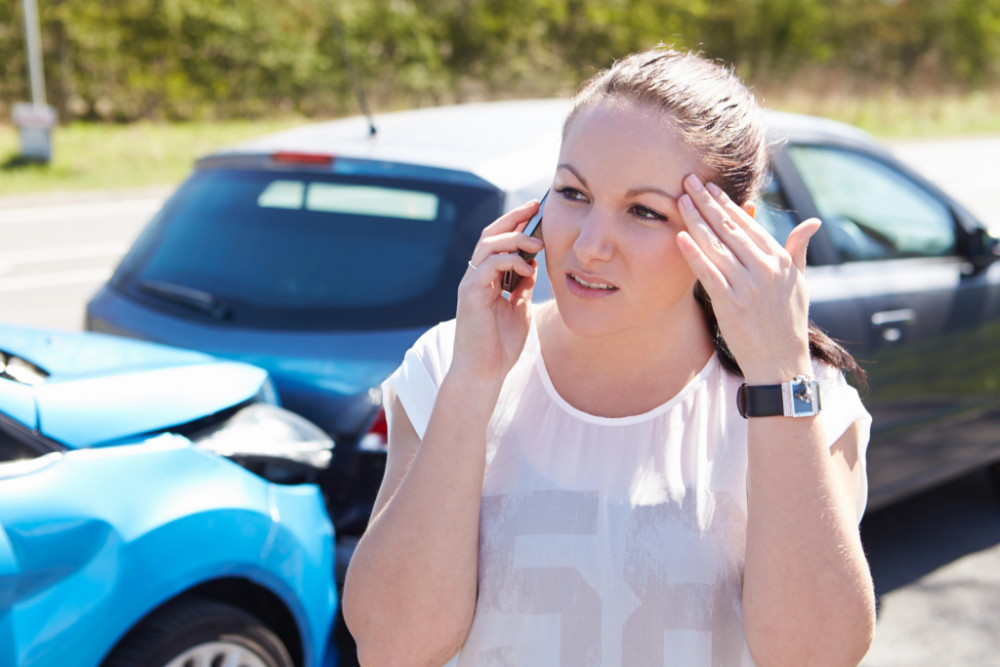

Your safety comes first. Check yourself and others for injuries and call 911 immediately if anyone is hurt. Even if injuries seem minor, it's important to get medical attention, as some symptoms may not appear right away. If possible, move to a safe location away from traffic while waiting for help to arrive.

Always report the accident to the police. An official police report creates an objective record of what happened, which can be critical for insurance claims and legal matters. Cooperate with the officer, provide accurate information, and avoid admitting fault at the scene.

If it's safe to do so, gather as much information as possible. Take photos or videos of the vehicles, damage, license plates, road conditions, traffic signs, and any visible injuries. Exchange contact and insurance information with the other driver(s) and attempt getting contact details from any witnesses in the area.

Even if you feel fine, consider seeing a medical professional as soon as possible. Injuries such as whiplash, concussions, or soft-tissue damage can take hours or days to show symptoms.

Report the accident to your insurance provider promptly and provide them with accurate details. Stick to the facts and avoid speculation. Keep copies of all documents related to the accident, including medical bills, repair estimates, and correspondence with insurers.

No Swearing at Other Drivers (Rockville Will Fine You)
In the city of Rockville, drivers are forbidden from cursing while behind the wheel. The law states that you may not use profanity and swear or use obscene language upon or near any street, sidewalk or highway within the hearing of persons passing by. Maryland has a record of having some of the most confrontational drivers on the East Coast. The city of Rockville decided the only way to deter people from engaging in this type of behaviour is to make it a misdemeanour crime.
Maryland's DUI Limit Is Stricter Than in Other States
The state of Maryland takes driving under the influence very seriously. The legal blood alcohol concentration limit in Maryland is 0.07, which is lower than other states. Many people are probably used to hearing 0.08, but that is not the case in Maryland. The state uses a two-tiered system, categorizing a BAC level of 0.07 to 0.079 as DWI (Driving While Intoxicated). The DWI offense typically carries a less severe punishment as a DUI. However, both DUI and DWI are considered criminal offenses and have some serious penalties such as fines, license suspension and jail time.
Washing Your Car in the Driveway May Not Be Lawful
Under local municipal and county codes it may be illegal to allow soapy runoff from washing your car to enter a street or storm drain. While homeowners are typically exempt from Maryland Department of Environment (MDE) discharge permits, they can still get hit with a fine for washing their cars in their driveways. Tourists renting homes or staying in residential areas are encouraged to use commercial car washes instead. Even a quick rinse in your driveway could technically violate local codes if the water runs into the street.
Street Racing & Stunt Driving Has Its Own Task Force
The state of Maryland has addressed the act of exhibition driving by creating a law banning operating a vehicle close to a crowd and intentionally skidding, swerving while accelerating, or causing the wheels to lose traction. In June 2024, House Bill 601 went into effect, making exhibition driving and street races illegal. Maryland created an entire Car Rally Task Force to enforce this ban on stunt maneuvers on public roads. In December 2024, authorities arrested five people, four of them minors, after the task force disrupted 10 illegal car gatherings over a single weekend. In fact, the state takes a very strict stance on not just stunt driving but also on modified cars, making it very difficult for car enthusiasts to have safe gatherings.
Fortune Telling Is Illegal in Baltimore
This is another one of those unusual local laws that makes fortune-telling illegal in the city of Baltimore. Violators can be fined as much as $500 or imprisoned for up to a year. While the ban has remained on the books for a long time, the law is not actively enforced. Higher courts in the state have worked to strike down similar bans, categorizing them as violations of free speech and unconstitutional.
The Use of Speed-Limiting Devices
In an effort to combat repeat speeders, the state of Maryland has authorized the use of intelligent speed assistance (ISA) systems in the vehicles of drivers facing license revocation due to repeated speeding violations. This technology uses GPS and internal accelerometers to prevent the vehicles from exceeding speed limits on public roads and highways.
Speeding Cameras at Work Zones
The state of Maryland has been using cameras to catch speeders in work zones. The strange part is the fact that the work zone does not have to be active in order for the driver to get a citation. You can be ticketed for exceeding the speed limit even if there are absolutely no construction workers or equipment present.
No Spitting on Sidewalks — But the Road Is Fine
Spitting on the sidewalk, hotel or lodging house in the city of Baltimore is explicitly forbidden. This old local legislation was originated in the early 20th century as part of a public health initiative designed to prevent the spread of diseases.