

In the state of New Hampshire, traffic crashes continue to impact road safety each year with over a hundred fatalities reported annually. In 2023, the state recorded 130 traffic fatalities, which occurred in approximately 122 fatal crashes, representing a decrease of about 11% compared with 146 deaths in 2022. Recent trends show around 127-134 fatalities in 2024, 130 in 2023 and 146 in 2022, indicating some fluctuation in annual totals. Most fatal crashes are linked to speeding, alcohol or drug impairment and distracted driving. A significant number of crashes occur on state highways and rural roads where higher speeds increase crash severity. Motorcycle fatalities were notably high in 2023, with around 39 deaths, marking the highest level in nearly two decades. Pedestrian and bicyclist fatalities also occur each year, though in smaller numbers compared with vehicle occupants. Overall, while New Hampshire has moderate crash totals, it faces notable risk factors such as rural driving conditions and seasonal weather impacts.
Passenger car occupants were involved in 27 fatalities (21%) of all traffic deaths in New Hampshire.
Motorcyclists accounted for 41 fatalities (32%), making them one of the largest categories of fatalities.
Occupants of light trucks and SUVs also recorded 42 fatalities (32%), representing an equally significant share.
Bus and public transportation vehicles were involved in 1 fatality (1%) statewide.
No fatalities (0%) were reported in crashes involving semi-trucks or tractor-trailers.
Pedestrian deaths totalled 15 fatalities (12%), highlighting risk for non-motorized road users.



High traffic volume, speeding, icy winter conditions


High crash frequency, speeding, called a "high-crash corridor"


Congestion, complex interchanges, urban crashes

Sharp curves, snow/ice, remote mountain terrain

Narrow lanes, steep grades, lack of guardrails
Single vehicle fatal car accident occur on rural road Route 16.
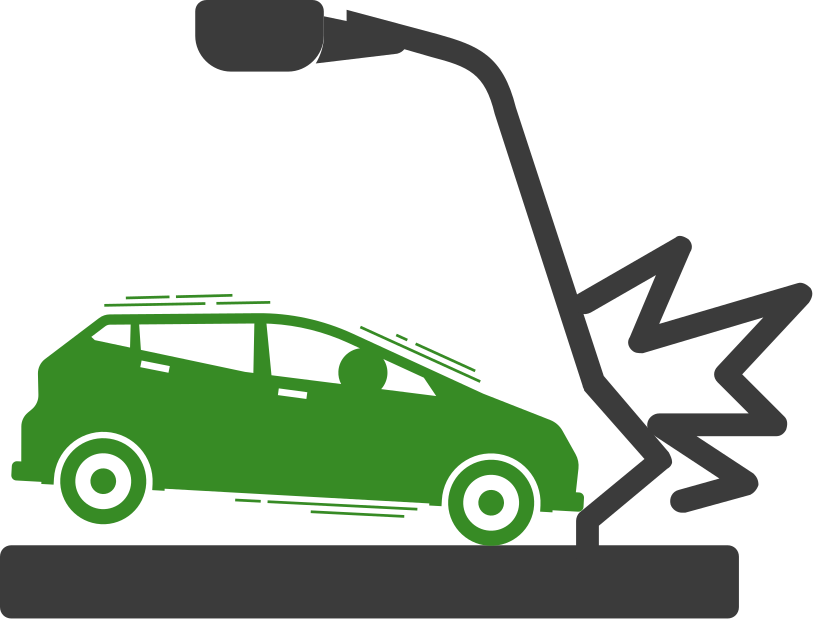
of fatal car accidents in New Hampshire happen in rural areas.

multiple vehicle fatal car accidents occur on Epping corridor road.
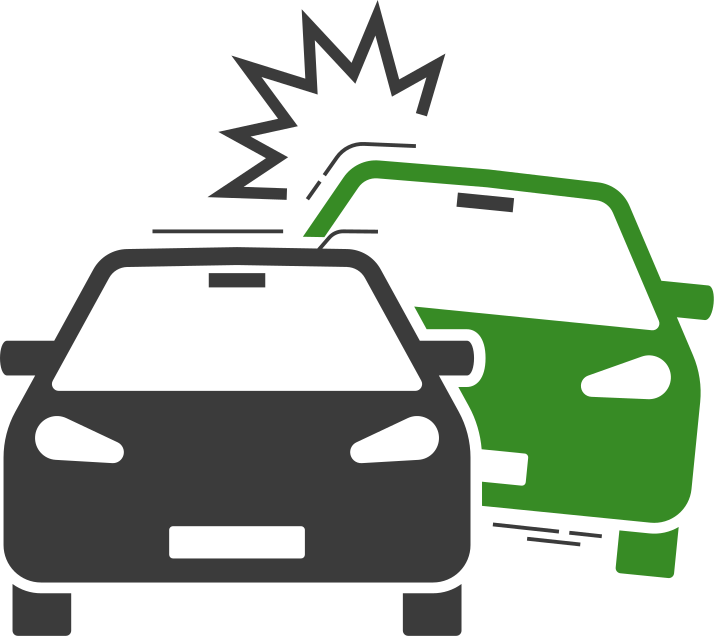
of fatal car accidents in New Hampshire happen in urban areas.



A car accident can be overwhelming and stressful, even if it's minor. Knowing what steps to take immediately afterward can help protect your health, your legal rights, and your financial interests. Here are five essential things to do after an accident:


Your safety comes first. Check yourself and others for injuries and call 911 immediately if anyone is hurt. Even if injuries seem minor, it's important to get medical attention, as some symptoms may not appear right away. If possible, move to a safe location away from traffic while waiting for help to arrive.

Always report the accident to the police. An official police report creates an objective record of what happened, which can be critical for insurance claims and legal matters. Cooperate with the officer, provide accurate information, and avoid admitting fault at the scene.

If it's safe to do so, gather as much information as possible. Take photos or videos of the vehicles, damage, license plates, road conditions, traffic signs, and any visible injuries. Exchange contact and insurance information with the other driver(s) and attempt getting contact details from any witnesses in the area.

Even if you feel fine, consider seeing a medical professional as soon as possible. Injuries such as whiplash, concussions, or soft-tissue damage can take hours or days to show symptoms.

Report the accident to your insurance provider promptly and provide them with accurate details. Stick to the facts and avoid speculation. Keep copies of all documents related to the accident, including medical bills, repair estimates, and correspondence with insurers.

No Seatbelt Required If You're Over 18
New Hampshire is the only state in the entire country that does not legally require drivers and passengers above the age of 18 to buckle up. The state's famous "Live Free or Die" motto applies apparently quite literally behind the wheel. The CDC linked this lax legislation to many of the 919 deaths related to vehicle crashes that occurred in New Hampshire between 2003 and 2012, with approximately 31% of New Hampshire drivers riding without seatbelts, which is more than double the national average.
No Helmet Required
In an era where nearly every other state mandate head protection for motorcycle riders, in New Hampshire you are not obligated by law to wear a helmet. While we all enjoy freedom as a philosophy, the consequences of applying this mentality to road safety can sometimes have some devastating consequences.
No Inhaling Bus Fumes for Fun
In New Hampshire, it is illegal to inhale bus fumes with the intent of becoming intoxicated. This law raises far more questions than it answers. One may wonder, how many people were doing this to call for this law to be enacted? Additionally, how exactly does a law informant prove intent while standing behind a city bus? A peculiar but technically still; enforceable rule that remains on the books to this day.
No Tapping Your Feet to Music in a Bar
New Hampshire law forbids patrons from tapping their feet, nodding their heads or keeping time to music in any way inside a tavern, restaurant, or cafe. So the next time a great song comes on at your local diner, sit absolutely still, your involuntary head bob is technically a criminal offense in the Granite State.
No Stealing Seaweed After Dark
This is another one of those antiquated laws drafted in 1973 to deter would-be seaweed criminals from hauling seaweed or rockweed under the darkness of New Hampshire's night sky. This law can still be found today under Chapter 207, Section 48 of New Hampshire state statutes.
New Hampshire Invented the Green LED Traffic Light
New Hampshire was the first state to install a green LED traffic light, doing so on May 17, 1996. What started as a small technological milestone in the Granite State has since become the global standard at intersections everywhere. Not a strange law, but a proud piece of driving history that most New Hampshire residents don't even know about.
Honk Before Passing a Skateboarder — But Never Pass a Horse
When overtaking another person on the street, including a skateboarder, drivers are required by law to honk before doing so. However, it is against the law to pass a horse-drawn buggy at all. You simply wait. Indefinitely.x
No Running Machines on Sundays
In New Hampshire, you are not allowed to operate machinery on Sundays. The excess noise from machinery is prohibited on the day of rest. This means no lawn mowers, no chainsaws and no major power tools.
Sugar Shakers Have a Legal Opening Size
In 1971, a New Hampshire legislator decided that the regulation of granulated sugar dispensing was a matter of urgent public importance and created a law regulating the opening of sugar shakers in New Hampshire restaurants. The opening must be less than 3/8 of an inch.