

In the U.S. state of New Jersey, 606 traffic fatalities were recorded in 2023, occurring in approximately 574 fatal crashes, representing a decrease of about 9% compared to 2022. Recent yearly data shows 684 fatalities in 2024, 606 in 2023, 689 in 2022 and 697 in 2021, indicating a slight decline followed by an increase. In 2023, the victim breakdown included 319 drivers, 89 passengers, 27 pedal cyclists and 171 pedestrians, highlighting the significant impact on vulnerable road users. A large number of crashes occur in urban and suburban areas with heavy traffic and pedestrian fatalities remain a major concern across the state. The leading causes of crashes in New Jersey include speeding, alcohol or drug impairment, distracted driving and failure to yield, especially at intersections. The state also has one of the highest rates of pedestrian fatalities in the U.S., driven by dense traffic, busy intersections and high population density, all of which contribute to increased crash frequency.
Passenger car occupants were involved in 190 fatalities (31%) of all traffic deaths in New Jersey.
Motorcyclists accounted for 90 fatalities (15%), representing a significant share of total fatalities.
Occupants of light trucks and SUVs recorded 109 fatalities (18%) statewide.
Bus and public transportation vehicles were involved in 27 fatalities (4%).
Semi-trucks and tractor-trailers accounted for 7 fatalities (1%) of the total.
Pedestrian deaths totalled 165 fatalities (27%), making them one of the largest categories of traffic fatalities in New Jersey.



Heavy traffic, truck congestion, high-speed crashes


High crash frequency, urban congestion, frequent intersections


Mixed local & highway traffic, pedestrian risk, congestion

High-speed traffic, truck routes, dangerous intersections

Merging traffic, complex interchanges, commuter congestion
Single vehicle fatal car accident occur on state highways & rural corridors (Route 40, Route 47, US-206).
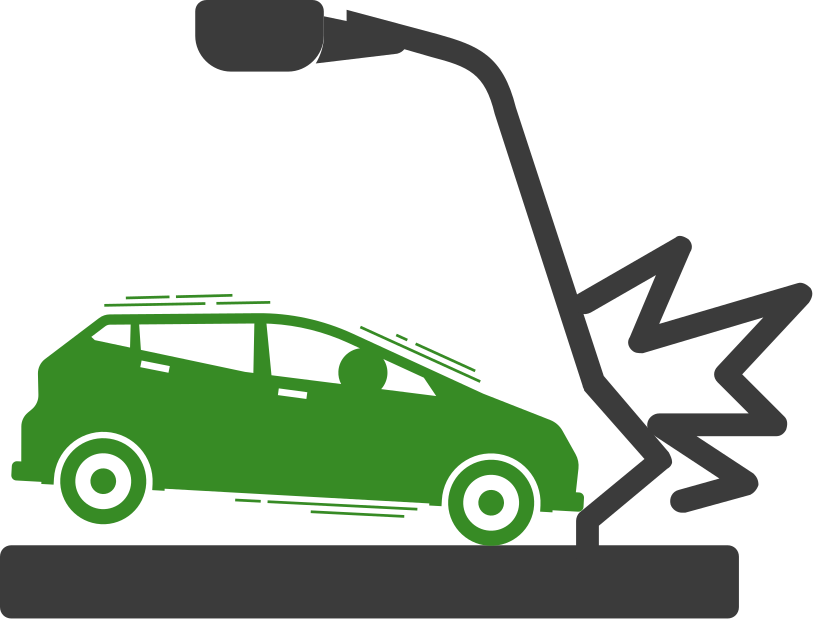
of fatal car accidents in New Jersey happen in rural areas.

Multiple vehicle fatal car accidents occur on busy interstates & urban roads.
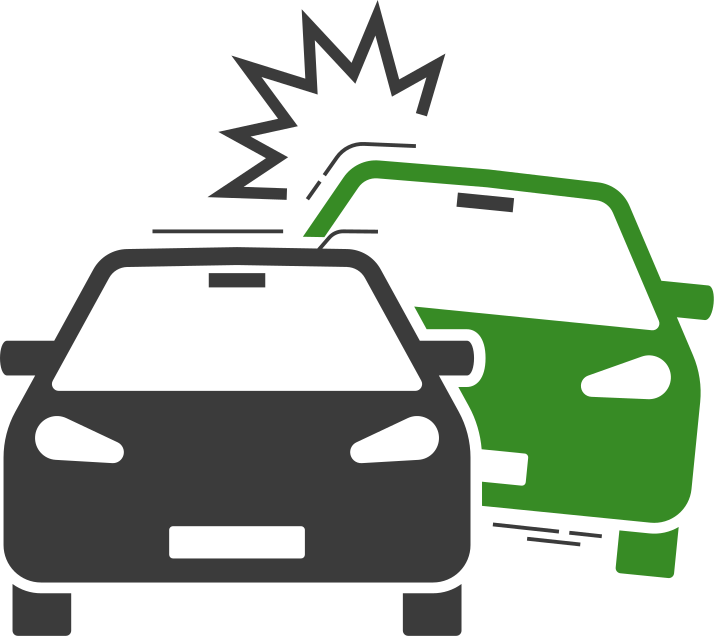
fatal car accidents in New Jersey happen in urban areas.


A car accident can be overwhelming and stressful, even if it's minor. Knowing what steps to take immediately afterward can help protect your health, your legal rights, and your financial interests. Here are five essential things to do after an accident:
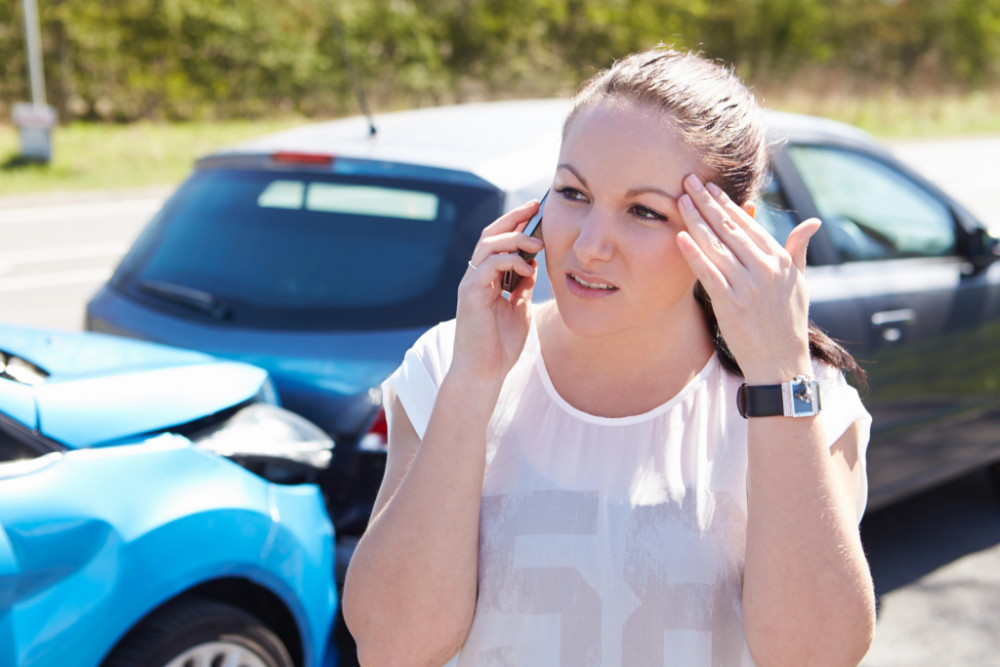

Your safety comes first. Check yourself and others for injuries and call 911 immediately if anyone is hurt. Even if injuries seem minor, it's important to get medical attention, as some symptoms may not appear right away. If possible, move to a safe location away from traffic while waiting for help to arrive.

Always report the accident to the police. An official police report creates an objective record of what happened, which can be critical for insurance claims and legal matters. Cooperate with the officer, provide accurate information, and avoid admitting fault at the scene.

If it's safe to do so, gather as much information as possible. Take photos or videos of the vehicles, damage, license plates, road conditions, traffic signs, and any visible injuries. Exchange contact and insurance information with the other driver(s) and attempt getting contact details from any witnesses in the area.

Even if you feel fine, consider seeing a medical professional as soon as possible. Injuries such as whiplash, concussions, or soft-tissue damage can take hours or days to show symptoms.

Report the accident to your insurance provider promptly and provide them with accurate details. Stick to the facts and avoid speculation. Keep copies of all documents related to the accident, including medical bills, repair estimates, and correspondence with insurers.

No self-service gas — attendants only
New Jersey is the only U.S. state that prohibits drivers from pumping their own gas. They were not always the only state to uphold this old ban; Oregon once too had similar legislation, but they dropped the ban in 2023, leaving NJ as the last holdout. According to this New Jersey law, only trained attendants may dispense fuel. Attendants must receive formal instruction and complete a supervised working day before operating pumps. Violations do not just affect the vehicle operator, the gas station gets cited as well.
Jug handle turns — no direct left turns on most highways
New Jersey's signature road feature is often referred to as the "jughandle": instead of turning left from a main road, drivers must exit right onto a curved ramp that loops around to cross the main road. Used on the Garden State Parkway, Atlantic City Expressway, and hundreds of routes across the state. Out-of-state visitors are often baffled by these jughandles. Missing a jug handle means driving past your turn with no easy fix.
Pets must be restrained or caged in vehicles
New Jersey's animal cruelty law explicitly covers vehicles. Dogs must be secured using a proper pet harness or seatbelt attachment. Cats and smaller animals must travel in a crate or carrier that is itself belted down. A dog hanging its head out the window is technically a violation.
No personalized license plates after a DWI conviction
New Jersey is the only state that prohibits the Motor Vehicle Commission from issuing vanity or personalized license plates to anyone convicted within the last 10 years of DWI, DUI, refusing a breathalyser or reckless driving. A conviction for death by vehicular homicide results in a permanent lifetime ban on personalized plates.
No visible TV screen while driving
It is unlawful to operate any vehicle on a public New Jersey highway if it has a television screen visible to the driver while in motion. The law predates modern touchscreens and GPS screens and was clearly aimed at dashboard TV sets, but its broad language has created ambiguity about whether large infotainment displays technically qualify. Courts have generally interpreted it narrowly to intentional entertainment screens.
New in 2024–2025
Starting February 2025, all permit holders under 21 must complete 50 hours of supervised driving — including at least 10 hours at night — before taking a road test.
For the first time ever, DWI plea bargaining is now allowed in NJ, letting defendants negotiate down to a reckless driving charge — a massive shift from NJ's decades-long no-plea-deal policy.