
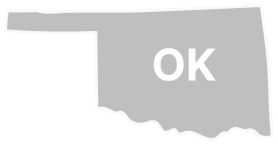
In Oklahoma, traffic crashes continue to be a major public safety issue, with tens of thousands of crashes reported annually. Total Crashes and Fatalities (2023)- Approximately 80,000+ total traffic crashes were reported statewide and 744 traffic fatalities occurred in 2023. Tens of thousands of people were injured in crashes. Oklahoma had 1.53 traffic fatalities per 100 million vehicle miles travelled in 2023 - the ninth highest rate in the nation, above the national average of 1.26. Fatalities and the fatality rate peaked in 2021 and have since fallen 9% and 10%, respectively, by 2023. However, from 2013 to 2023, Oklahoma's number of traffic fatalities and fatality rate are still up 3% and 8%, respectively. The majority of crashes involve property damage only. A smaller percentage are fatal crashes, but they account for significant loss of life. Over 50% of 2023 fatalities involved alcohol, drugs, or lack of restraints. Oklahoma City had approximately 1,700 injury and fatal crashes in a recent year, resulting in 99 fatalities and 2,096 injuries. Major cities like Oklahoma City and Tulsa reported the highest total number of crashes. Rural areas tend to have fewer total crashes but higher fatality rates due to higher speeds and delayed emergency response.
Cars accounted for 210 fatalities, representing 29% of all traffic deaths in Oklahoma.
Motorcycles were involved in 103 fatalities, making up 14% of the total.
Light trucks and SUVs were the leading category, responsible for 256 fatalities and 36% of all traffic deaths.
Buses and public transportation accounted for 15 fatalities, comprising 2% of the total.
Semi-trucks and tractor-trailers were involved in 21 fatalities, representing 3% of all traffic deaths.
Pedestrians accounted for 87 fatalities, making up 12% of the total.



The deadliest road stretch in Oklahoma. A 10-mile section recorded 26 fatal crashes and 27 deaths in 5 years. Heavy traffic, major interchanges and high speeds increase risk.


Includes multiple dangerous segments, especially near I-40. High crash rates due to busy interchanges and congestion. Also, part of the Turner Turnpike, known for fast-moving traffic.


One of the most dangerous routes in Tulsa. Reported 19 fatal crashes and 22 deaths in a key segment. Frequent merging and urban congestion contribute to accidents.

Major north-south corridor with heavy daily traffic. A dangerous stretch near Norman recorded 17 fatal crashes. High speeds and long-distance travel increase crash severity.
One of the busiest highways in the state. Risk factors include: High-speed driving, Construction zones, weather-related hazards.
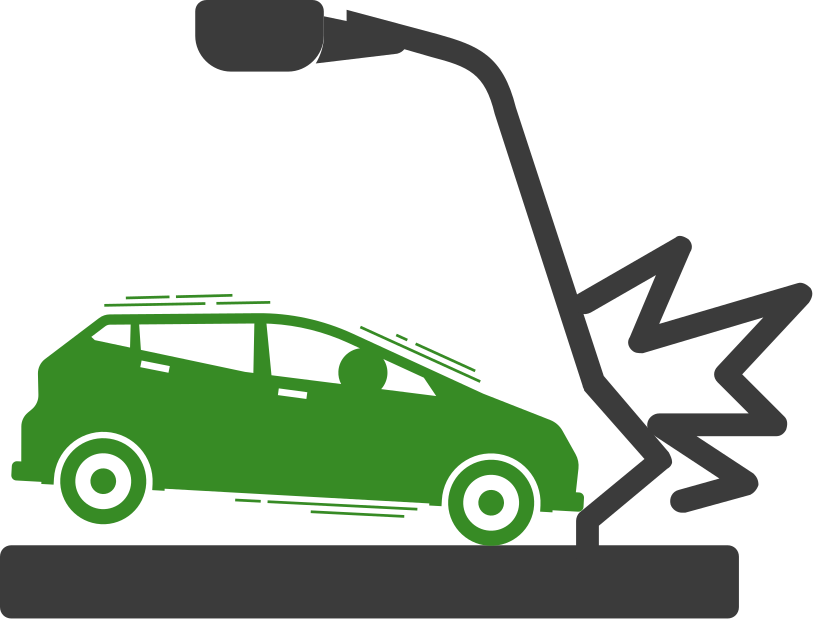
Single vehicle fatal car accident occur on state highways & rural corridors (Route 40, Route 47, US-206).
of fatal car accidents in Oklahoma happen in rural areas.

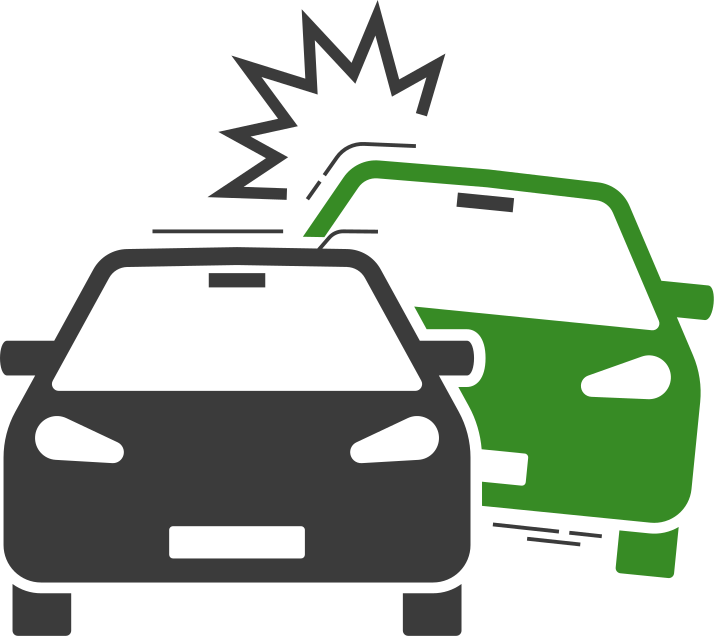
Multiple vehicle fatal car accidents occur on busy interstates & urban roads.
fatal car accidents in Oklahoma happen in urban areas.


A car accident can be overwhelming and stressful, even if it's minor. Knowing what steps to take immediately afterward can help protect your health, your legal rights, and your financial interests. Here are five essential things to do after an accident:


Your safety comes first. Check yourself and others for injuries and call 911 immediately if anyone is hurt. Even if injuries seem minor, it's important to get medical attention, as some symptoms may not appear right away. If possible, move to a safe location away from traffic while waiting for help to arrive.

Always report the accident to the police. An official police report creates an objective record of what happened, which can be critical for insurance claims and legal matters. Cooperate with the officer, provide accurate information, and avoid admitting fault at the scene.

If it's safe to do so, gather as much information as possible. Take photos or videos of the vehicles, damage, license plates, road conditions, traffic signs, and any visible injuries. Exchange contact and insurance information with the other driver(s) and attempt getting contact details from any witnesses in the area.

Even if you feel fine, consider seeing a medical professional as soon as possible. Injuries such as whiplash, concussions, or soft-tissue damage can take hours or days to show symptoms.

Report the accident to your insurance provider promptly and provide them with accurate details. Stick to the facts and avoid speculation. Keep copies of all documents related to the accident, including medical bills, repair estimates, and correspondence with insurers.

Distracted Operating Laws It is illegal to read a comic book while operating a motor vehicle in Oklahoma City. While oddly specific, the law falls under the state’s comprehensive distracted driving statues. First time offenders will be slapped with a $50 fine.
Road Laws Apply to Horses
According to Oklahoma State law, individuals riding a horse or driving a horse-drawn carriage on a public roadway must adhere to all the same traffic laws applicable to motor vehicles. In most cases violators are fined in the same way as regular motorists.
The whale transportation restriction
This is another one of those oddball laws, especially when you consider the fact that Oklahoma is a landlocked state. However, it has a good purpose, as it is designed to protect endangered whale species. The law extends to your vehicle. If you are transporting a whale across the state, whether in your truck bed or trailer, you are in violation of state law.
The oil derrick right-of-way provision
Oklahoma has more man-made lakes than any other state, largely because of oil infrastructure. As a courtesy, not yet formalized but widely observed, drivers are expected to slow down when passing an active oil pump jack.
The permit requirement for window stickers
Tulsa once had an ordinance requiring a permit to paint slogans on your vehicle. While largely unenforced today, putting "Honk if you love peace and quiet" on your rear bumper in the 1950s could have theoretically landed you in front of a city clerk. The irony of needing bureaucratic approval for anti-establishment messaging was apparently lost on everyone.
Bar location restrictions
Oklahoma once restricted how close a bar could be to a church or school. This created a bizarre geography in many towns where the shortest legal driving route from anywhere to anywhere else passed directly through a moral grey zone.
The tornado yield law
No formal statute exists requiring drivers to yield to a tornado, because the legislature assumed this was obvious. And yet, every spring, Oklahoma drivers must be reminded via emergency broadcast that a tornado is not a weather event you can simply drive around if you are in a hurry.
Strange State Spitting Restrictions
In the city of Marietta, it is illegal to spit outside from a car or a bus. However, it is perfectly legal to spit from a truck. The origins of this law are a bit unclear; however, we can all agree it is an odd one.