

Pennsylvania reports over 1,100 traffic fatalities annually, with 1,179 deaths recorded in 2022, 1,230 in 2021 and 1,129 in 2020, indicating slight fluctuations but an overall concerning trend. In 2023, light trucks, SUVs and vans were involved in a growing share of crashes, with 72,320 total crashes and 611 fatal crashes, accounting for approximately 28.3% of all fatalities. Crash severity in the state is largely driven by key risk factors such as speeding, impaired driving due to alcohol or drugs and failure to use seatbelts. During the 2023 Thanksgiving holiday period alone, 979 crashes were reported, resulting in 4 fatalities and 73 alcohol-related incidents. Additionally, vulnerable road users, including pedestrians and cyclists, continue to face a higher risk of serious injuries and deaths, highlighting ongoing safety challenges across the state.
Cars were involved in the highest number of fatalities, accounting for 379 deaths, which represents 31% of all traffic fatalities in Pennsylvania.
Motorcycles were responsible for 240 fatalities, making up 20% of the total crash deaths recorded, reflecting the heightened vulnerability of riders on the road.
Light trucks and SUVs were the second-largest category, with 299 fatalities, representing 25% of all traffic deaths in the state.
Buses and public transportation vehicles were involved in 29 fatalities, accounting for 2% of the total crash deaths recorded.
Semi-trucks and tractor-trailers contributed to 20 fatalities, comprising 2% of all crash deaths, underscoring the dangers posed by large commercial vehicles.
Pedestrians accounted for 185 fatalities, representing 15% of all traffic deaths, highlighting the continued risk faced by those traveling on foot in Pennsylvania.



• Widely considered the most dangerous road in Philadelphia.
• Up to 12 lanes with complex design and high speeds.
• High number of fatal crashes and pedestrian accidents.


• One of the busiest roads running through the city.
• Heavy mix of cars, buses, cyclists, and pedestrians.
• Recently identified as one of the deadliest roads in terms of fatalities.


• Narrow lanes, sharp curves, and heavy congestion.
• Frequent stop-and-go traffic leads to high crash risk.
• One of the most accident-prone highways in the region.

• Major interstate with heavy traffic and complex interchanges.
• Frequent merging and lane changes increase collision risk.
• Mix of trucks and passenger vehicles adds to danger.

• High pedestrian activity with limited safe crossings.
• Narrow lanes, parking, and bus stops create congestion.
• Known for frequent urban crashes and pedestrian risks.
Single vehicle fatal car accident occurs on rural areas (Erie, Scranton, Harrisburg areas).
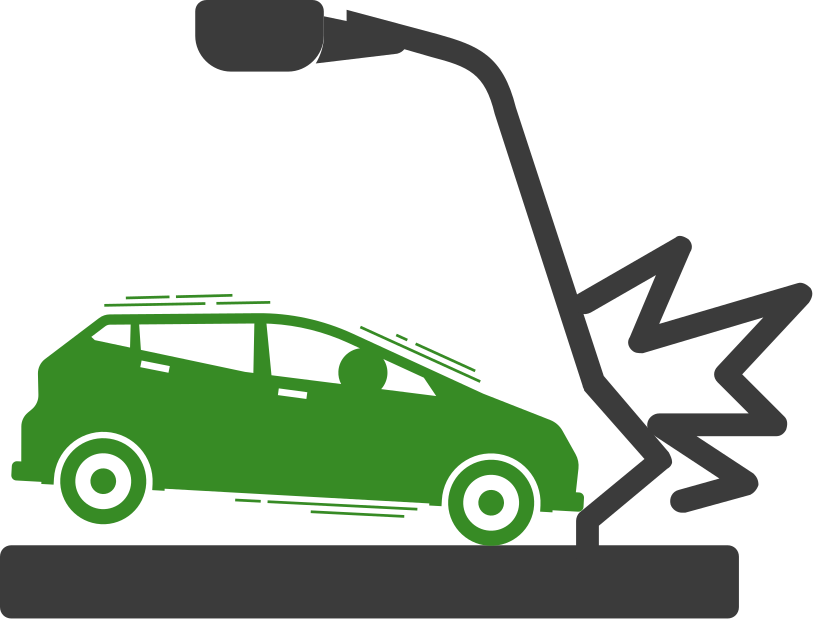
of fatal car accidents in Pennsylvania happen in rural areas.

multiple vehicle fatal car accidents occur in urban cities (Philadelphia, Pittsburgh, Allentown).
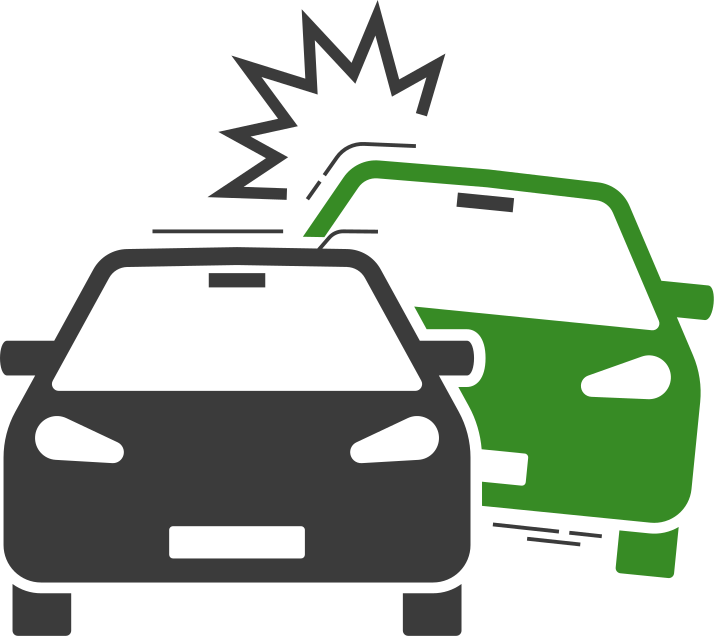
of fatal car accidents in Pennsylvania happen in urban areas


A car accident can be overwhelming and stressful, even if it's minor. Knowing what steps to take immediately afterward can help protect your health, your legal rights, and your financial interests. Here are five essential things to do after an accident:
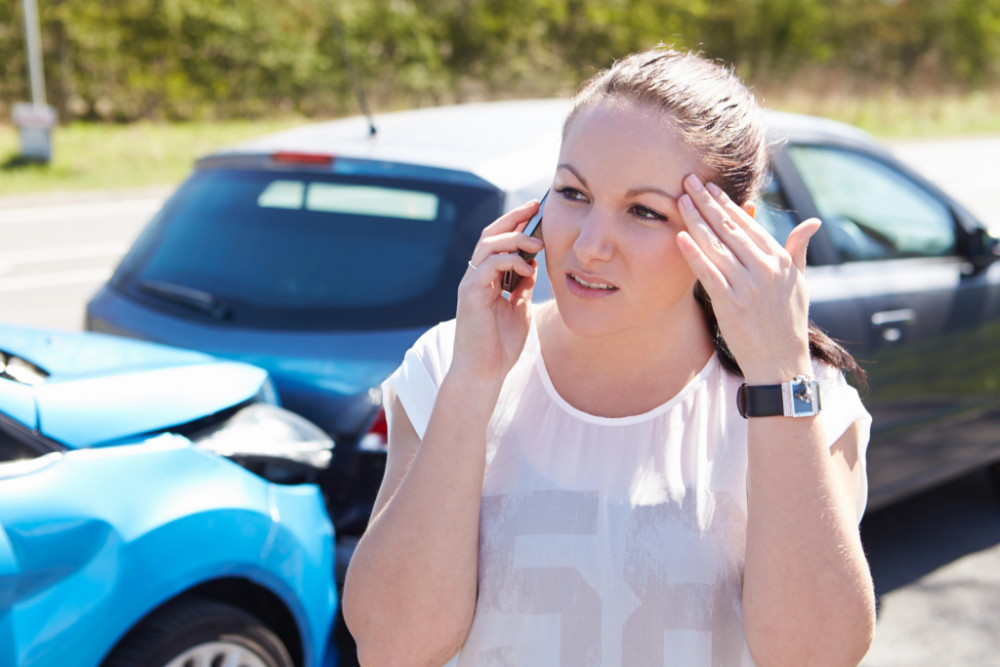

Your safety comes first. Check yourself and others for injuries and call 911 immediately if anyone is hurt. Even if injuries seem minor, it's important to get medical attention, as some symptoms may not appear right away. If possible, move to a safe location away from traffic while waiting for help to arrive.

Always report the accident to the police. An official police report creates an objective record of what happened, which can be critical for insurance claims and legal matters. Cooperate with the officer, provide accurate information, and avoid admitting fault at the scene.

If it's safe to do so, gather as much information as possible. Take photos or videos of the vehicles, damage, license plates, road conditions, traffic signs, and any visible injuries. Exchange contact and insurance information with the other driver(s) and attempt getting contact details from any witnesses in the area.

Even if you feel fine, consider seeing a medical professional as soon as possible. Injuries such as whiplash, concussions, or soft-tissue damage can take hours or days to show symptoms.

Report the accident to your insurance provider promptly and provide them with accurate details. Stick to the facts and avoid speculation. Keep copies of all documents related to the accident, including medical bills, repair estimates, and correspondence with insurers.

Don’t scare horses with your car
The state of Pennsylvania requires that you take reasonable precaution to avoid frightening a horse. If a horse gets spooked, drivers are required to pull over, stop and even turn off the engine until the animal calms down.
Livestock Night Driving Law
An old quirky law requires stopping every mile at night and sending up a flare or signal as a warning sign and waiting for livestock to clear before proceeding forward. Clearly this is one of those outdated laws that is no longer enforced.
No driving with ice or snow flying off your car
Drivers are required to clear all of the snow and ice off the car before driving on public roads. You can be fined if snow or ice falls from your vehicle and endangers others.
No selling cars on Sundays
In many areas, car dealerships are not allowed to operate on Sundays, which feels unusual compared to other states. This law dates back to colonial-era blue laws put in place to enforce the Christian Sabbath as a day of rest and worship.
You must yield to funeral processions
Drivers are legally required to give the right-of-way to funeral processions, even if traffic signals say otherwise.
Gated Road Rule
If you are driving through a gated area, you are required to stop and close the gate after you pass through it. Violators could face fines upwards of $750.
Seatbelt law varies by age
Adults are only required to wear seatbelts in front seats, but children must be properly restrained at all times.