

In Vermont, vehicle crash statistics for 2023 show that over 7,000 crashes were reported, including more than 5,300 property-damage-only incidents and over 1,600 injury crashes, indicating a steady level of roadway incidents across the state. There were approximately 65 fatal crashes resulting in 69 to 71 deaths, with fatality numbers remaining relatively consistent with recent years but still slightly above the five-year average. Although overall crash totals declined compared to 2022, injury crashes continued to make up a significant portion of incidents. Impaired driving, including alcohol and drugs, was a major contributing factor in about 65% of fatal crashes, while speeding and distracted driving also played key roles in deadly accidents. In terms of road users, drivers accounted for around 52 fatalities, passengers about 11, pedestrians approximately 5 and bicyclists about 1. A notable trend in Vermont is that nearly 87% of all fatalities occurred on rural roads, highlighting the increased danger associated with higher speeds, limited lighting and less forgiving road conditions in rural areas.
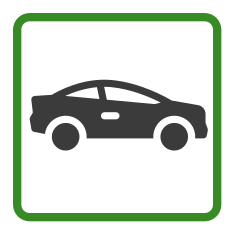
Car crashes accounted for 19 fatalities (28%), representing a significant share of total road deaths.
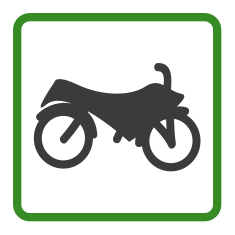
Motorcycle crashes resulted in 18 fatalities (26%), highlighting the elevated risk for riders.
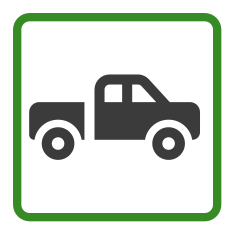
Light trucks and SUVs were involved in 21 fatalities (30%), making them the leading vehicle category in fatal crashes.
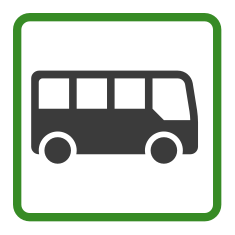
Bus/Public transportation crashes contributed to 1 fatality (1%), reflecting a minimal proportion of incidents.
Semi/tractor-trailer crashes also accounted for 1 fatality (1%), typically associated with high-impact collisions.
Pedestrian-involved crashes led to 5 fatalities (7%), emphasizing risks for vulnerable road users.



Considered the most dangerous road in Vermont, with a high number of fatalities over the years; risk factors include narrow two-lane sections, poor visibility and winter weather conditions.


The busiest highway in the state, especially between Williston and Burlington; heavy commuter traffic, merging vehicles and winter conditions often lead to multi-vehicle crashes.

A rural corridor with frequent crashes due to sharp curves, fog, wildlife crossings and high-speed travel on narrow roads.
A major east-west route with both rural and urban sections. Accidents are linked to speed, long-distance driving and changing road conditions.
Popular scenic highway but dangerous due to winding roads, tourist traffic and harsh winter driving conditions.
Single vehicle fatal car accident occur on rural roads and highways.
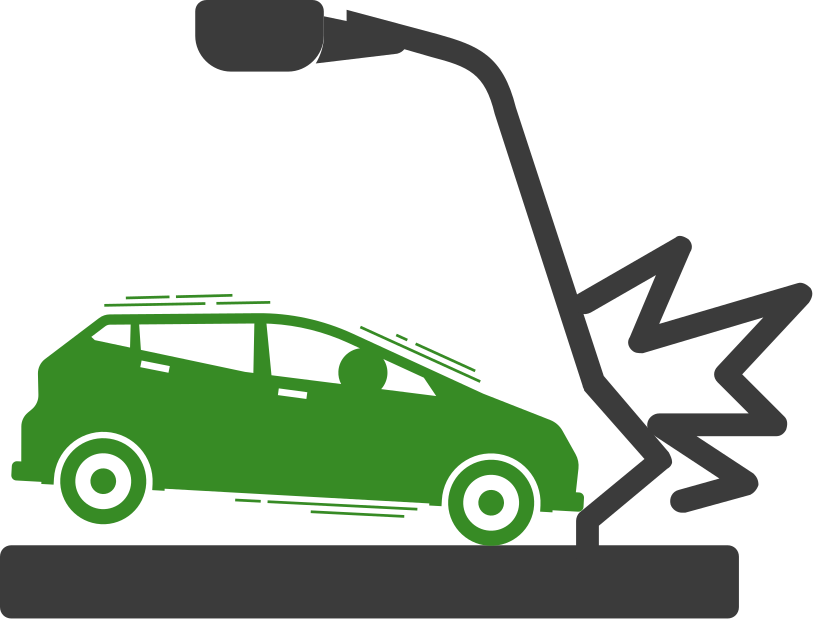
of fatal car accidents in Vermont happen in rural areas.

Multiple vehicle fatal car accidents occur in urban areas and town canters.
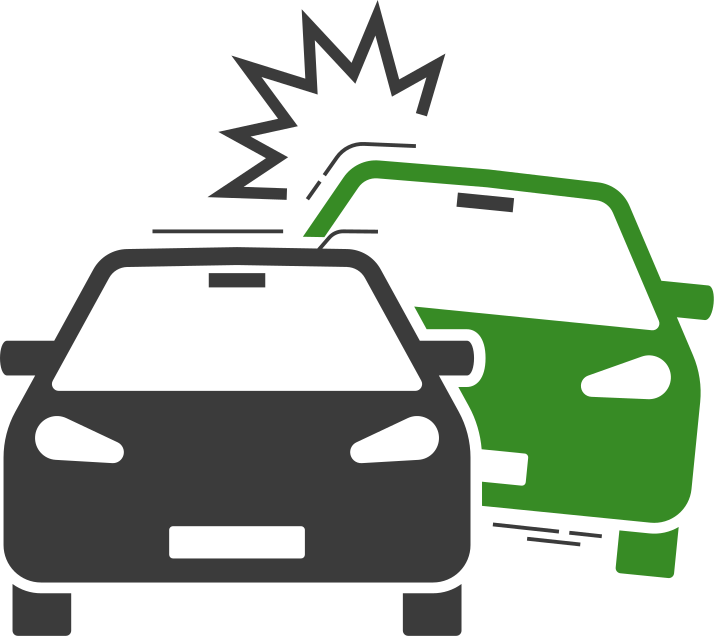
of fatal car accidents in Vermont happen in urban areas.


A car accident can be overwhelming and stressful, even if it's minor. Knowing what steps to take immediately afterward can help protect your health, your legal rights, and your financial interests. Here are five essential things to do after an accident:
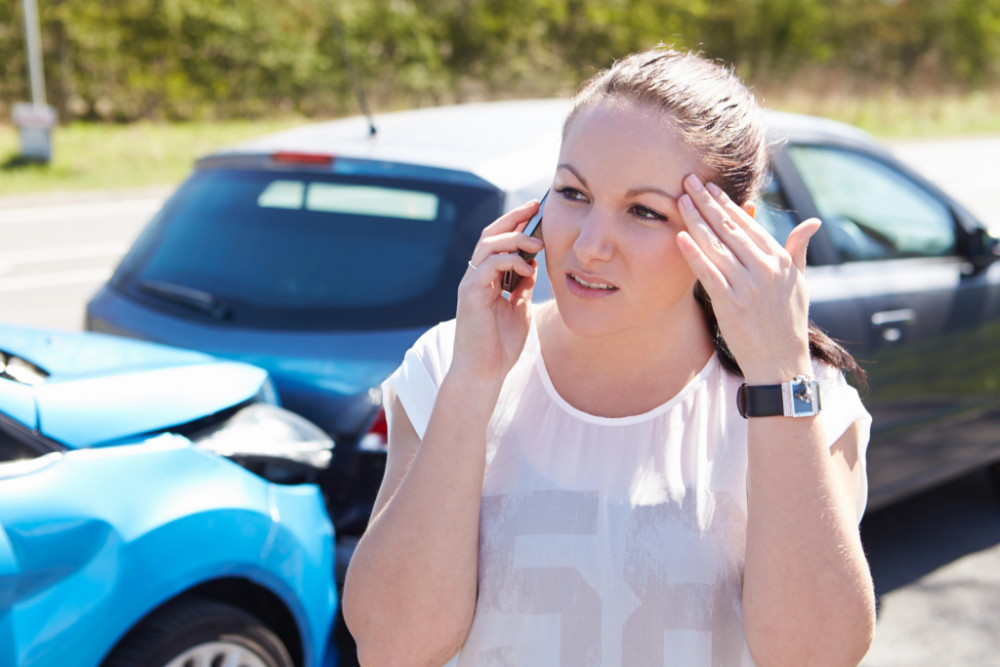

Your safety comes first. Check yourself and others for injuries and call 911 immediately if anyone is hurt. Even if injuries seem minor, it's important to get medical attention, as some symptoms may not appear right away. If possible, move to a safe location away from traffic while waiting for help to arrive.

Always report the accident to the police. An official police report creates an objective record of what happened, which can be critical for insurance claims and legal matters. Cooperate with the officer, provide accurate information, and avoid admitting fault at the scene.

If it's safe to do so, gather as much information as possible. Take photos or videos of the vehicles, damage, license plates, road conditions, traffic signs, and any visible injuries. Exchange contact and insurance information with the other driver(s) and attempt getting contact details from any witnesses in the area.

Even if you feel fine, consider seeing a medical professional as soon as possible. Injuries such as whiplash, concussions, or soft-tissue damage can take hours or days to show symptoms.

Report the accident to your insurance provider promptly and provide them with accurate details. Stick to the facts and avoid speculation. Keep copies of all documents related to the accident, including medical bills, repair estimates, and correspondence with insurers.

No commercial billboards on public highways. This law aims to protect scenic views and limit driver distraction.
Vermont is one of the few states that allows drivers to overtake slower traffic on a double yellow line as long as it is safe to do so.
It is illegal in Vermont to drive a vehicle that backfires intentionally. Anyone with a modified car running a burble tune or having a modified exhaust system that creates loud pops while driving on a quiet country road is technically breaking the law!
Vermont has a strict hands-free driving law that prohibits the use of any handheld mobile devices while operating a vehicle. Drivers are not allowed to hold, touch or use handheld phones. This law makes the state of Vermont one of the tougher states when it comes to distracted driving, with fines typically ranging from $100 to $500.
A left-hand turn on red is allowed in certain areas. When turning from a one-way street left onto another one-way street, it is lawful in Vermont to turn on red after a complete stop. This law commonly applies to turning right, but in the state of Vermont, in some areas, it is lawful.
Vermont law prohibits drivers from leaving their vehicle running unattended on a public road. This law is practically ironic because during Vermont's brutal winters most locals prefer to warm up the car by keeping it running for a few minutes prior to braving the sub-zero degree morning commute.
In Vermont, it is illegal to drive a vehicle with an unsecured load that could fall onto the road. This law was created to increase road safety, as the state has countless pickup trucks hauling maple syrup barrels, lumber and farm equipment down rural Vermont back roads every single day!
It is illegal in Vermont to operate a motor vehicle on a sidewalk. This is one of those common-sense laws that should go without saying; however, during the peak of Vermont's ski season, the line between sidewalk, parking lot and road can become so snow-covered and indistinguishable that many drivers have unknowingly broken this law without even realizing it!
Vermont has some of the strictest laws in the country regarding the transportation of alcoholic beverages in a vehicle. Beyond banning open containers anywhere in the passenger area of a vehicle, the law also controls how much liquor you can transport at any one given time. While the importation of wine is limited to 6 gallons, you will need a permit to travel with over 8 quarts of spirits and hard liquor.