

In Wyoming, vehicle crash statistics for 2023 show that approximately 13,487 traffic crashes were reported statewide, with a significant number occurring on rural highways and interstate corridors. Wyoming continues to have one of the highest vehicle fatality rates in the United States due to factors such as long travel distances, high-speed rural roads, severe winter weather and heavy truck traffic. Lane and road departure crashes remained the leading type of collision, accounting for nearly 60% of all crashes and about 78% of critical crashes. Wildlife collisions were also a major concern, with 2,148 wildlife-related crashes reported, most commonly involving deer. Motorcyclists faced elevated risks as well, with 15 fatalities and over 200 motorcycle crash involvements recorded during the year. Major contributing factors to fatal crashes included speeding, impaired driving, distracted driving, winter weather conditions and failure to maintain control on rural roads and interstates such as I-80. Rural areas accounted for a large share of severe and fatal crashes due to higher travel speeds, mountain terrain, strong winds, snow and limited lighting, making roadway safety a continuing challenge across the state.
In the state of Wyoming, passenger cars were involved in a total of 34 traffic fatalities, accounting for 24% of all recorded traffic fatalities within the state during the reporting period, representing the second largest category of vehicle-related fatalities in Wyoming.
Motorcycles were involved in a total of 15 traffic fatalities within the state of Wyoming, representing 10% of all recorded crash deaths, underscoring the significant vulnerability of motorcycle operators and passengers on Wyoming roadways and highlighting the critical need for enhanced motorcycle safety awareness programs throughout the state.
Light trucks and sport utility vehicles (SUVs) constituted the single largest category of vehicle-related fatalities in the state of Wyoming, with a total of 62 deaths recorded, representing 43% of all traffic fatalities reported within the state during the designated reporting period, reflecting the widespread use of larger vehicles on Wyoming's expansive rural road network.
Buses and public transportation vehicles were involved in a total of 2 traffic fatalities within the state of Wyoming, accounting for 1% of all recorded crash deaths, reflecting the relatively limited presence and lower fatality risk associated with public transportation vehicles on Wyoming roadways during the reporting period.
Semi-trucks and tractor-trailer vehicles were involved in a total of 10 traffic fatalities within the state of Wyoming, comprising 7% of all recorded crash deaths, highlighting the significant safety concerns associated with large commercial vehicles operating on Wyoming's extensive highway network, particularly on high-speed rural interstate corridors that traverse the state.
Pedestrians accounted for a total of 11 traffic fatalities within the state of Wyoming, representing 8% of all recorded traffic deaths, emphasizing the critical need for enhanced pedestrian safety measures, improved infrastructure and increased public awareness initiatives across Wyoming roadways to better protect vulnerable road users throughout the state.



Widely considered the most dangerous road in Wyoming due to steep mountain terrain, icy winter conditions, wildlife crossings and long rural stretches with limited visibility.


One of the deadliest interstate corridors in the country, especially between Cheyenne and Evanston, known for high winds, black ice, snowstorms, truck rollovers and massive winter pileups.


A steep mountain pass with sharp switchbacks, avalanche risk, and dangerous winter driving conditions, making it especially hazardous for trucks and inexperienced drivers.

Famous for steep grades, hairpin turns and blind corners through the Bighorn Mountains, creating a high risk of serious crashes.

A dangerous route through remote and mountainous terrain with narrow lanes, sharp curves, tourist traffic and sudden weather changes.
Single vehicle fatal car accidents occur in rural and mountainous highway areas near Cheyenne, Casper and Laramie.
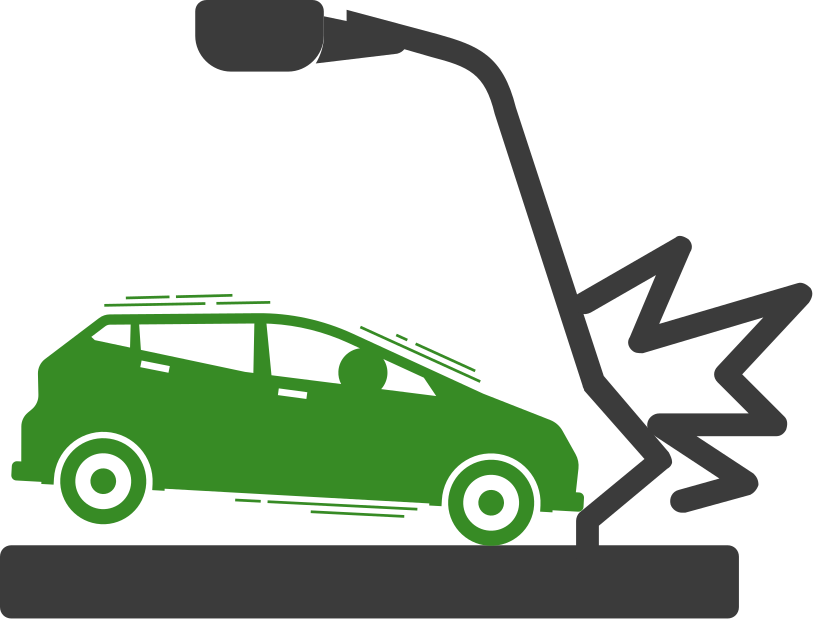
of fatal car accidents in Wyoming happen in rural areas.

Multiple vehicle fatal car accidents occur in Interstate 80 and urban highway corridors.
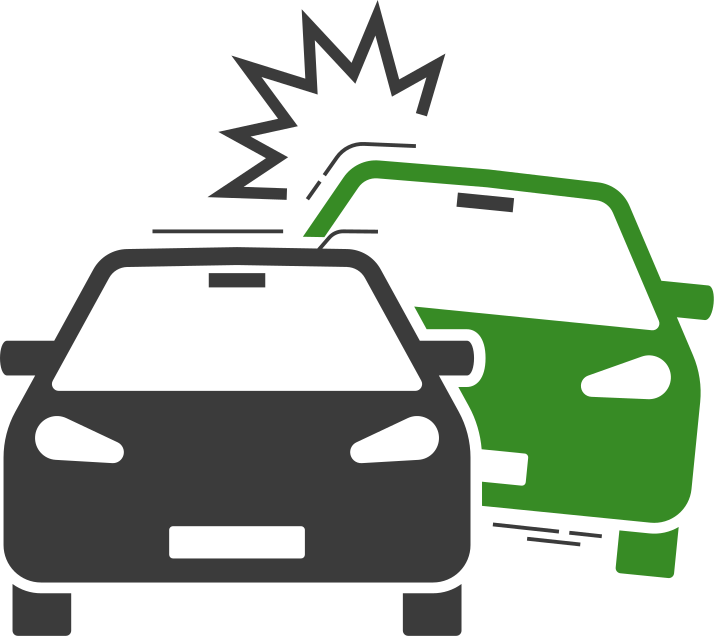
of fatal car accidents in Wyoming happen in urban areas.


A car accident can be overwhelming and stressful, even if it's minor. Knowing what steps to take immediately afterward can help protect your health, your legal rights, and your financial interests. Here are five essential things to do after an accident:


Your safety comes first. Check yourself and others for injuries and call 911 immediately if anyone is hurt. Even if injuries seem minor, it's important to get medical attention, as some symptoms may not appear right away. If possible, move to a safe location away from traffic while waiting for help to arrive.

Always report the accident to the police. An official police report creates an objective record of what happened, which can be critical for insurance claims and legal matters. Cooperate with the officer, provide accurate information, and avoid admitting fault at the scene.

If it's safe to do so, gather as much information as possible. Take photos or videos of the vehicles, damage, license plates, road conditions, traffic signs, and any visible injuries. Exchange contact and insurance information with the other driver(s) and attempt getting contact details from any witnesses in the area.

Even if you feel fine, consider seeing a medical professional as soon as possible. Injuries such as whiplash, concussions, or soft-tissue damage can take hours or days to show symptoms.

Report the accident to your insurance provider promptly and provide them with accurate details. Stick to the facts and avoid speculation. Keep copies of all documents related to the accident, including medical bills, repair estimates, and correspondence with insurers.

The Open Container Law Exception: Wyoming is one of the very few states in the United States that has historically had a more relaxed approach to open alcohol container laws in vehicles. While federal regulations have pushed states to adopt stricter laws, Wyoming's approach to this issue has been notably more lenient than most other states in the country, making it a unique outlier in American traffic legislation.
The Wildlife Collision Law: Wyoming has specific laws governing what drivers must do after colliding with wildlife on a public road. Given the state's abundant wildlife population including deer, elk, moose and antelope, Wyoming allows drivers to keep certain animals they have struck with their vehicle, provided they report the collision to the appropriate authorities within a specified timeframe. Wyoming is one of the few states where a vehicle collision can legally result in a free dinner.
The Railroad Crossing Law: Wyoming strictly enforces railroad crossing laws, requiring all drivers to come to a complete stop at railroad crossings when a train is approaching or when crossing signals are activated. Given the extensive network of railroad crossings that traverse Wyoming's vast rural landscape, this law is considered one of the most critically important traffic safety regulations in the state.
The Speed Limit Enforcement Law: Wyoming has some of the highest speed limits in the country, with certain rural interstate highways with 80 mph speed limits. However, the state has a zero-tolerance policy towards speeding and strictly enforces the state speed limits.
The Headlight Requirement Law: Wyoming law requires all drivers to turn on their headlights whenever visibility is reduced due to poor weather conditions such as snow, fog, rain or dust storms. This law is particularly important for ensuring safety, given Wyoming's notoriously harsh and unpredictable weather conditions.
The Snowplow Passing Law: Wyoming has specific laws governing how drivers must approach and pass snowplows. Drivers are legally required to maintain a safe distance behind snowplows and are prohibited from passing a snowplow while the snowplow is actively working clearing the snow. The only time a driver is legally allowed to pass a snowplow is when it is not clearing the road or when directed by a law enforcement officer. This law aims to ensure the safety of both snowplow operators and other road users during Wyoming's long and harsh winter season.
The Move Over Law: Wyoming's Move Over Law requires all drivers to move over one lane or reduce their speed significantly when passing emergency vehicles with flashing lights. The Move Over Law is considered one of the most strictly enforced laws in the state and failure to comply with Wyoming's Move Over Law can result in significant fines.
No Hunting From The Road: The state makes it illegal to hunt, shoot and kill animals from a vehicle across a public road. This law is strictly enforced due to the state’s high wildlife population.
Can’t Use a Firearm for Fishing: Wyoming makes it illegal to fish using a firearm on public land. Using a shotgun or any explosive device to catch fish comes with hefty fines and can even come with a jail sentence.
Close Gate Law: In Wyoming it is illegal to leave a gate open on a roadway that spans a road stream or ditch. You are required to close the gate as soon as you pass it. This law was created to keep livestock contained and away from busy public roadways.
The Studded Tire Law: Wyoming permits the use of studded snow tires during the state’s harsh winter months. The need for enhanced traction on snow- and ice-covered roads is vital for safe vehicle operation. However, the use of studded tires is restricted during good summer weather. The state also has specific guidelines regarding the size and type of studs permitted, ensuring that road surfaces are not unnecessarily damaged.
The Passing on the Right Law: While state law allows drivers to pass slower vehicles using the left under certain conditions, drivers are also allowed to pass other vehicles on the right side. Right hand passing is allowed when the vehicle being passed is making or about to make a left turn. Drivers must exercise extreme caution when doing so, as improper passing on the right is a leading cause of traffic accidents on Wyoming's rural highways and interstate corridors.
The Bicycle Road Law: Wyoming law grants cyclists the same rights and responsibilities as motor vehicle operators on public roads, requiring drivers to share the road safely with cyclists and maintain a safe passing distance when overtaking a bicycle on a public road. Given Wyoming's popularity as a cycling destination, particularly during the summer months.
The Agricultural Vehicle Law: Wyoming has specific laws governing the operation of agricultural vehicles and equipment on public roads. Drivers of these vehicles are subject to additional safety requirements, specific speed limits, lighting requirements and road use regulations.