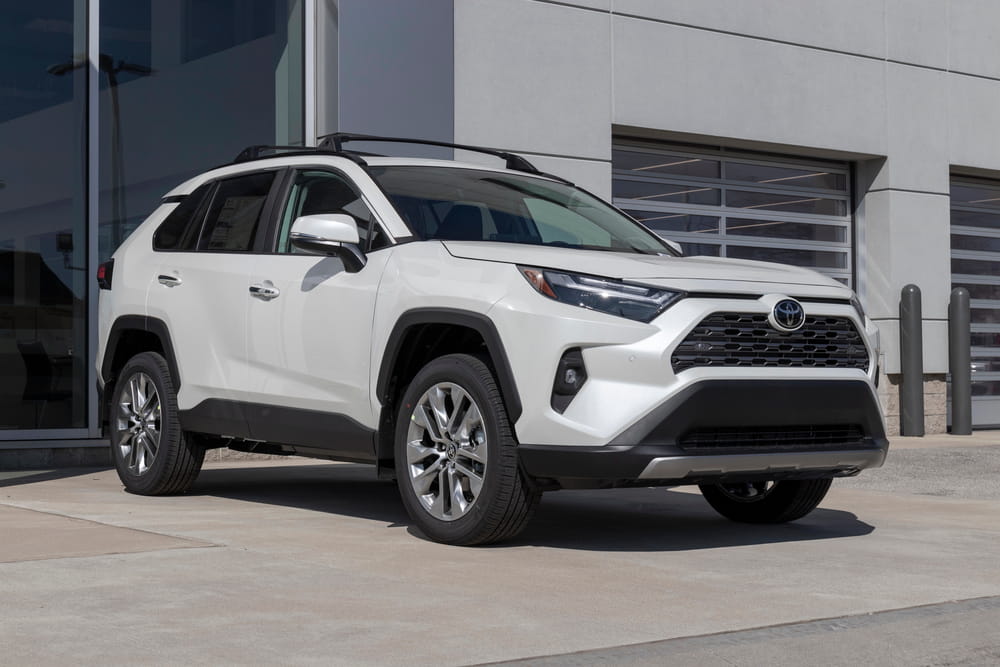
AI Safety Cameras Changing Roadway Surveillance and Why You Should be Concerned
Valerie Raskovic
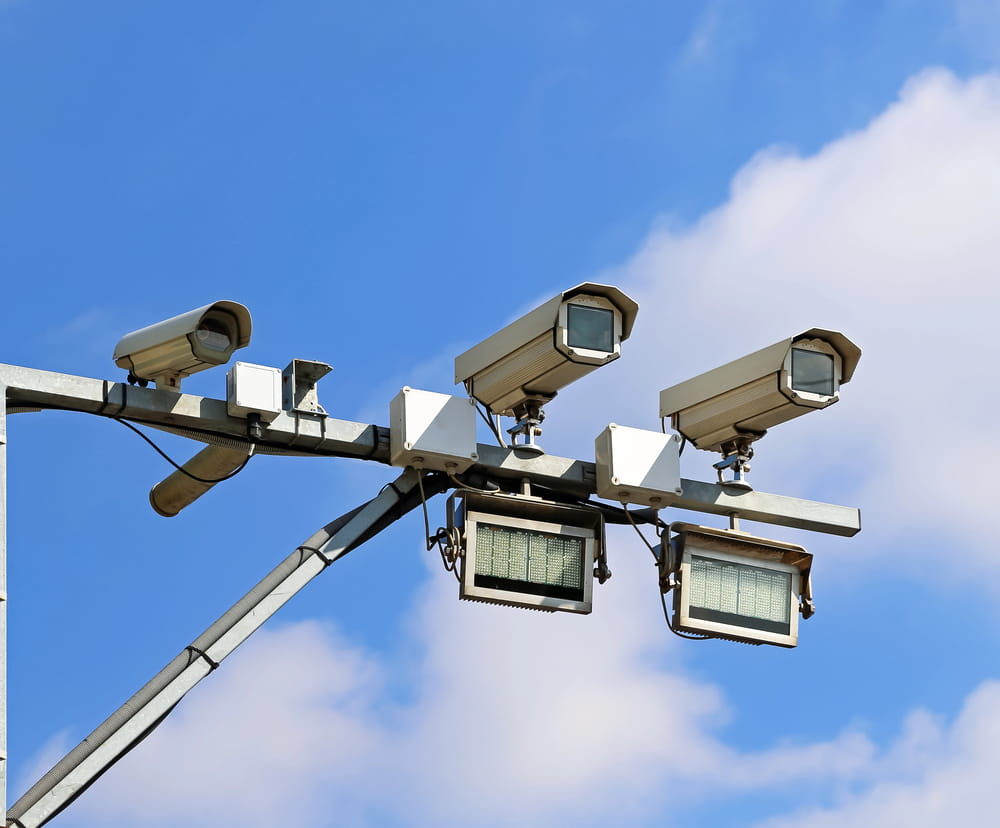
Over the past several years, AI-powered safety cameras have become an increasingly common sight on roads, in neighborhoods and at the entrances to shopping centers and residential communities across the United States. Unlike traditional traffic cameras, these cameras are part of complex systems that are designed to automatically capture license plates, vehicle characteristics and even employ the use of facial recognition technology to help law enforcement track and ticket traffic violators, locate stolen vehicles, identify suspects and investigate crimes. Flock cameras represent a significant expansion of government surveillance with important implications for privacy and civil liberties.
What Are Flock Safety Cameras?
Flock safety cameras are AI-powered high-resolution camera systems thar are designed to primarily capture and identify license plate numbers. They can also capture information about the vehicle such as the make, model, color and any distinguishing features such as decals, roof racks and even collision damage. However, they can also be used to track pedestrians and the driver’s face.
Unlike radar speed cameras, these advanced systems are generally intended to identify and locate vehicles and their operators. Making the recorded data available to a variety of government-contracted agencies and law enforcement.
A Frightening New Era of Automated Tracking
Traditionally, law enforcement has relied on eyewitnesses to locate suspects and persons of interest. Today, AI-driven networks of Automatic License Plate Recognition (ALPR) cameras can automatically detect and track vehicles as they travel through any area equipped with Flock Safety Cameras. In communities with extensive camera coverage, this can provide investigators with a historical record showing where a vehicle was observed at various times.
Law enforcement agencies claim that widespread adoption of this surveillance technology can speed up criminal investigations. The technology may also help law informant to establish a clear timeline of events as it allows investigators to identify a vehicle that was in the vicinity of a crime or reconstruct portions of its route after an incident.
Are AI-Powered Camera Systems Infringing on our Freedom?
One of the more controversial developments has been proposals to expand camera deployment beyond stationary roadside installations. In some communities, officials have discussed mounting cameras on municipal vehicles, including garbage trucks and other city service vehicles, to increase geographic coverage. Several cities across the country are exploring new ways to use flock cameras to generate additional revenue. One of the proposals involves placing AI-powered camera systems on sanitation vehicles to scan private homes for code violations. The system would be able to spot signs of construction even inside the home, as it can identify construction debris visible from the street. This will allow the local code enforcement agency to check if the property has a construction permit and fine the owner for any undocumented repairs and renovations.
Needless to say, the deployments and widespread adoption of AI cameras will significantly expand the collection of people’s data in residential neighborhoods, raising questions about the appropriate scope of surveillance and how such data should be governed.
While these types of surveillance systems can have some obvious benefits, they also have some significant costs. Collecting information on all residents regardless if they did something wrong or not, seems un-American or at the very least raises some constitutional debate.
The main issues revolve around the overall uncertainty related to:
- Data storage: How long is it stored and where?
- Data Access: Who has the right to access the data and when?
- Oversight: What oversight exists to prevent misuse?
- Data sharing: Is the data shared across jurisdictions?
- Forming Behavioral Patterns and Monitoring: It is very likely that data collected through AI-powered cameras can reveal patterns related to where someone may reside, work, worship, date and receive medical care.
The fact of the matter is that continuously recording and aggregating vehicle and people movements and behavior on a large scale creates a fundamentally different level of surveillance than occasional observation. The widespread deployment of automated surveillance infrastructure could normalize continuous tracking of everyone’s everyday activities. Moving society toward a more heavily monitored environment essentially creates a police state.
The issue amongst regular Americans often lies in the fundamental distrust of their government. Many people fear that the expansion of AI-powered surveillance will go beyond the investigation of serious crimes. As we all know, people in power will fight to stay in power and who says that government officials will not turn this technology against the citizens of this great country to satisfy their personal ambitions and career goals? Concerns over potential misuse by unauthorized users or insiders are very real, as they can have devastating consequences. The possibility of "mission creep," where systems originally deployed for one purpose are gradually used for broader objectives, should be on the minds of even law-abiding citizens.
It is very difficult to balance advanced AI-powered investigative tools with people’s constitutional right to privacy. Some privacy advocates argue that the widespread implementation of advanced AI surveillance conflicts with the implicit rights granted to us by the first, third, fourth, fifth, ninth and fourteenth amendments. As interpreted by the US Supreme Court, these amendments work together to ensure our freedoms and pursuit of personal liberty by restricting the unapproved government interference in our personal lives.
Benefits and Technological Limitations
While the technology has some potential benefits for most law-abiding Americans, the direct day-to-day benefit may be limited. The technology can assist police in recovering stolen vehicles, locating suspects, and investigating certain crimes, which may indirectly contribute to public safety. It may also help identify vehicles involved in hit-and-run collisions or support missing-person investigations as well as be used to identify building code violations and work to improve real estate safety and add some security to financial transactions while generating additional revenue that can be used for things like local schools and infrastructure.
It is possible that many people may never directly experience the benefits of AI-powered surveillance technology, while their movements are likely to be recorded by camera networks during routine travel and activity. In these cases, the tradeoff between enhanced investigative capabilities and increased data collection is not appropriate and can be argued that it infringes on our freedom as Americans.
Another thing to consider is that, similar to any advanced technological systems, AI-powered technology is not perfect and can be prone to false positives, errors and major failures. Simple factors such as poor weather and lighting conditions can affect image quality or recognition accuracy. Just imagine being pulled by armed officers for a crime you did not commit simply because of a tech glitch. This is a real possibility that can have devastating effects not only on the individual but also on society as a whole. As we have learned through history, a government that works against the interest of its citizens is bound to fail.
Final Thoughts
The discussion ultimately centers on a fundamental question: how to balance the limited potential public-safety benefits of modern investigative tools with individual privacy and civil liberties. As law informants and local governing agencies continue to expand the use of artificial intelligence in their surveillance and investigation processes, privacy advocates and law-abiding, freedom-loving Americans will continue to fight against judicial overreach and privacy infringement. The current lack of oversight and transparency measures will continue to spark heated debates and possibly bring about some common-sense legislations.
Read more articles