Have some car insurance companies lost their minds?
Valerie Raskovic
We have witnessed insurance companies cutting costs, employing a variety of tactics and while not all of their cutting-cost measures directly affect the policyholder. Some recent changes with low-cost insurance companies can affect the vehicle’s safety, long-term reliability and value.
For years it has been common practice for insurance companies to approve aftermarket parts or recycled body parts when repairing older vehicles after a collision. Replacement of body panels like bumpers, doors, fenders and other cosmetic components sourced from salvage yards or third-party manufacturers has long been part of the cost-saving strategies used throughout the insurance industry. However, a newer, alarming trend has started to emerge with some lower-cost insurance providers. These companies have started approving the use of recycled wear-and-tear suspension components in repair estimates. While the implications of the change may not be obvious to everyone, this change can have a monumental effect on the quality of the repair.
Moving Beyond Cosmetic Parts
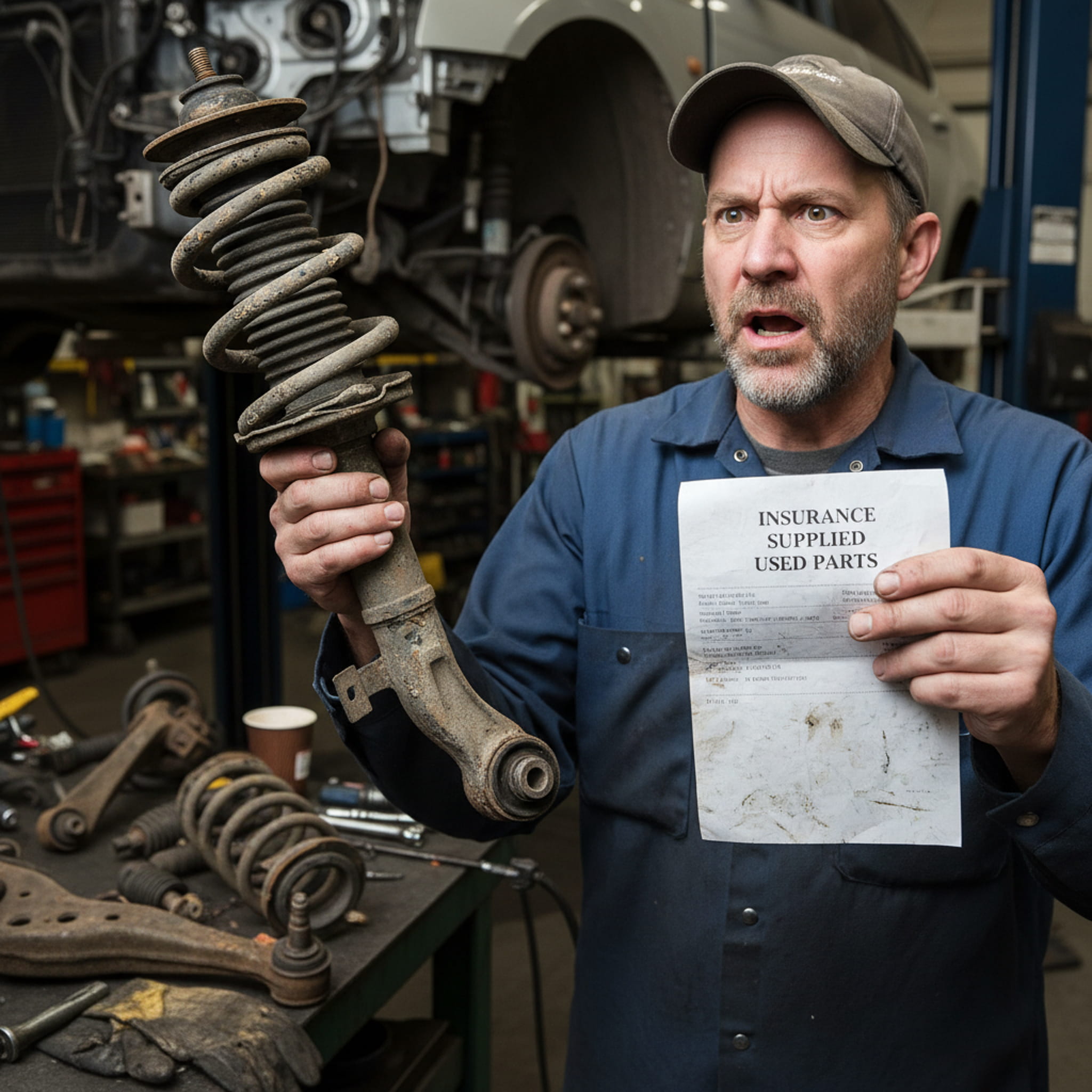
The use of recycled parts was mostly reserved for non-mechanical vehicle components. But increasingly, some insurance companies are defaulting to used parts for critical wear and tear moving components such as:
- Struts
- Steering knuckles
- Control arms
- Suspension links
- Spindles and hubs
- And more…
The Problem of Using Complex Used Moving Components
Unlike a used hood panel, these are not simple cosmetic items, as they contain moving components, rubber bushings, springs, compressed oil or gas and have different operational life cycles. These components have a direct effect on vehicle handling, ride quality, alignment and safety. It is nearly impossible to calculate the usable lifespan from a suspension component like a shock or a strut. Keep in mind these parts experience a variant degree of stress, including road impact, heat cycles, corrosion, environmental exposure and more… It may also be impossible to determine if the component was sourced from a vehicle that was involved in a previous collision and has been affected by the impact.
A recycled suspension component may look acceptable externally while already being near the end of its service life internally. This is the reason why no one can determine how long it will continue to perform as designed.
Why Many Body Shops Refuse to Warranty Repairs that Use Complex Salvage Components
It should come as no surprise that many reputable body shops are hesitant or are outright unwilling to provide warranties on suspension repairs completed with recycled parts. The remaining lifespan of a used moving component is unpredictable and often is not backed by any warranty by the seller.
A used control arm or strut may function properly initially, only to fail prematurely weeks or months later. Keeping in mind that the repair facility did not manufacture or originally maintain the component, they may not want to assume liability for future failures. In other words, the gamble of whether these used parts will stand the test of time lies on the policyholder.
Potential Risks
If your vehicle was damaged due to an accident, the insurance company is supposed to make you whole; however, it is important to bear in mind their top priority is their bottom line. Insurance companies are businesses and controlling claim costs is part of their business model.
There are many car insurance companies out there and unfortunately many of them compete for your business solely by price. Often the insurance company that can provide the lowest-cost insurance quote will get the business. Most consumers do not ask how that insurance company was able to come up with a lower quote than some of the others. In most cases those low insurance rates are derived through extreme cost-cutting measures. Commonly, these cost-cutting tactics only show their ugly heads after an accident or some other vehicle loss event. The time when you need your car insurance the most is when you will find out that they may not provide the type of coverage you may have expected.
If you are shopping around for quality car insurance, you must research and ask the right questions before signing your name on the dotted line.
While recycled body panels are one thing, insurance companies/policies that require the use of salvaged suspension components raise serious safety concerns.
The risk factors of using pre-owned suspension components include:
- Reduced Reliability
Older used components may wear out much sooner than expected and may fail prematurely.
- Alignment and Handling Issues
Suspension parts directly affect steering response and handling.
- Tire wear
Worn or damaged suspension components may cause uneven or even accelerated tire wear.
- Vehicle stability
Vehicle stability may be affected by worn-out internal suspension components not clearly visible to the naked eye.
- Additional Repair Costs
Recycled parts tend to have a shorter lifespan than new ones; for this reason, you are more likely to make out of pocket repairs earlier than expected.
Reading the insurance policy document fully can save you in the long run, as many low-cost insurance providers may deny additional costs associated with new OEM (Original Equipment Manufacturer) or aftermarket parts and may deny coverage after the original claim closes. However, many consumers are becoming increasingly concerned about how far some companies are willing to go to reduce expenses.
Questions to Ask Your Car Insurance Company
Before signing up for coverage, you should ask the insurance company the following questions:
- Does the policy allow aftermarket or recycled parts?
- Are OEM parts covered?
- Are suspension and mechanical components eligible for recycled replacements?
- Can I choose my own repair shop?
A lower premium may seem attractive initially, but the trade-offs can become apparent after an accident.
The Takeaway
Not all insurance companies handle repairs the same way. As repair costs continue to rise, some lower-cost insurers are increasingly relying on aggressive cost-cutting measures.
Price should never be the only factor when choosing car insurance. Understanding how your insurer handles repairs can help protect both your vehicle and your wallet in the long run.
Read more articles
Post a comment
Popular Articles