Why Regularly Rotating Your Tires Is So Important
Valerie Raskovic
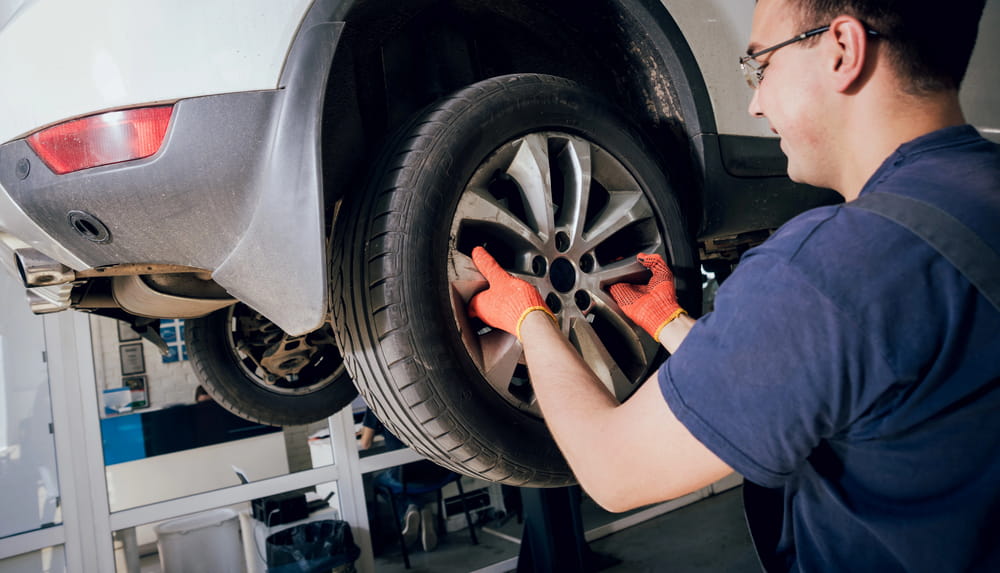
Regular tire rotation is one of the simplest and most overlooked maintenance tasks by car owners. Tire rotations play a major role in how your vehicle performs on wet and dry roads and how long your tires last. Not rotating your car’s tires can lead to uneven wear, reduced performance and may even generate other related expenses.
What Is Tire Rotation?
Let’s start with the basics. To rotate your tires is to periodically change the position of each tire on your vehicle. For example, moving the front tires to the rear and vice versa. This helps ensure that all four tires wear more evenly over time. This is especially important on front or rear-wheel-drive cars, as one side typically wears faster than the other. Keep in mind not all tires wear at the same rate.
In addition to the drivetrain type, there are also several other factors that can contribute to uneven wear:
- Front tires often wear faster due to steering and braking forces.
- Driving style can also affect tire wear patterns. For example, frequent hard acceleration from a dead stop can wear the drive wheels more rapidly while rapid braking can wear the front tires more rapidly.
- Cornering forces also have a major effect on tires. Tires will wear differently depending on the roads you drive regularly.
Benefits of Regular Tire Rotation
Rotating tires every 5,000 to 8,000 miles has several benefits, such as:
1. Longer Tire Life
Even wear helps maximize the lifespan of your tires, saving you money in the long run.
2. Better Handling and Performance
Uneven tires can affect traction, steering response and overall driving stability.
3. Improved Safety
Balanced tire wear helps maintain proper grip, especially in wet or slippery conditions or during emergency braking and maneuvering.
4. Smoother Ride
Significant uneven wear between wheels can cause vibration and noise. Rotation helps keep the ride comfortable.
5. May help prevent premature wear and tear on modern all-wheel drive systems.
Some modern cars equipped with advanced all-wheel drive systems may be more sensitive to uneven tire wear and falsely identify the difference in tire diameter and grip as slippage, engaging the all-wheel drive system and creating unnecessary wear and tear on system components.
When Tire Rotation May Not Be Possible
There are a couple of cases when tire rotation is not possible and should not be attempted.
- Staggered Wheel Setups
Some vehicles, mainly rear-wheel-drive performance cars, use a different size tire in the back than they have in the front. In these cases, tires cannot be rotated front to back. It is highly recommended to consult with the manufacturer to determine if rotation is possible.
- Directional Tires
Some tires are designed to rotate in only one direction, meaning they cannot be interchanged so easily.
Helpful Maintenance Tips
Common tire rotation service intervals range between 5,000 and 8,000 miles, often aligning with oil change intervals. However, always check your vehicle’s owner’s manual for specific recommendations.
Perform regular inspections such as:
- Check tire pressure to prevent uneven wear.
- Inspect tread and sidewalls for damage or irregular patterns.
- Maintain proper alignment. Misalignment can ruin tires quickly.
- Balance your tires to avoid vibrations.
- Keep records of your rotations to stay on schedule.
Don’t ignore clear signs that your tires need a rotation. The most obvious one is uneven tread wear.
The Takeaway
Tire rotation is a small investment that can lead to significant savings in the long run and improves safety. While some vehicles may have limitations due to staggered or directional setups, most cars benefit greatly from regular rotations.
Read more articles
Post a comment
Popular Articles
Why More and More Drivers are Saying No to the Bells and Whistles and Choosing Simpler, No-Frills Vehicles
The Hidden Truth About the Collision Repair Industry and Why a Shiny Paint Job Doesn't Always Mean a Properly Repaired Car

Is The New Jaguar Type 01 the Future of Electric Cars?

What Is a Pink Slip and Why Is It So Important?

How Your BMW VIN Can Reveal More About the Vehicle