Did you know that one of the worst automotive legislations is set to go into effect next year?
Valerie Raskovic
While we have relied on the government to help make roads and highways a safer place in recent years, with the advent of AI and other technological advancements, it appears the government has gone a step too far. It appears that the 2021 Infrastructure Investment and Jobs Act have a particularly nasty piece of legislation that will not just change the way we travel but will affect our personal privacy and safety all the while increasing the cost of car ownership. Starting the 2027 model year, the National Highway Traffic Safety Administration is going to require that all vehicles be equipped with passive driver monitoring systems.
The new legislation is generating serious debate across the automotive industry, among consumers, automotive technicians and privacy advocacy groups. While the goal of keeping impaired drivers off the road is noble, as reducing intoxicated driving can save lives, the reality of how this technology will affect drivers and the public at large is unknown. Consumers are concerned about how this technology can affect their everyday lives, raising significant questions that remain largely unanswered.
The Uncertainty
Under the law, automakers will be required to equip vehicles with systems capable of detecting whether a driver may be impaired. If impairment is detected, the vehicle must be capable of taking action. On paper, that sounds straightforward. In practice, however, the legislation leaves enormous gaps regarding exactly how these systems are expected to operate, what thresholds determine impairment, and what kind of intervention the vehicle will perform.
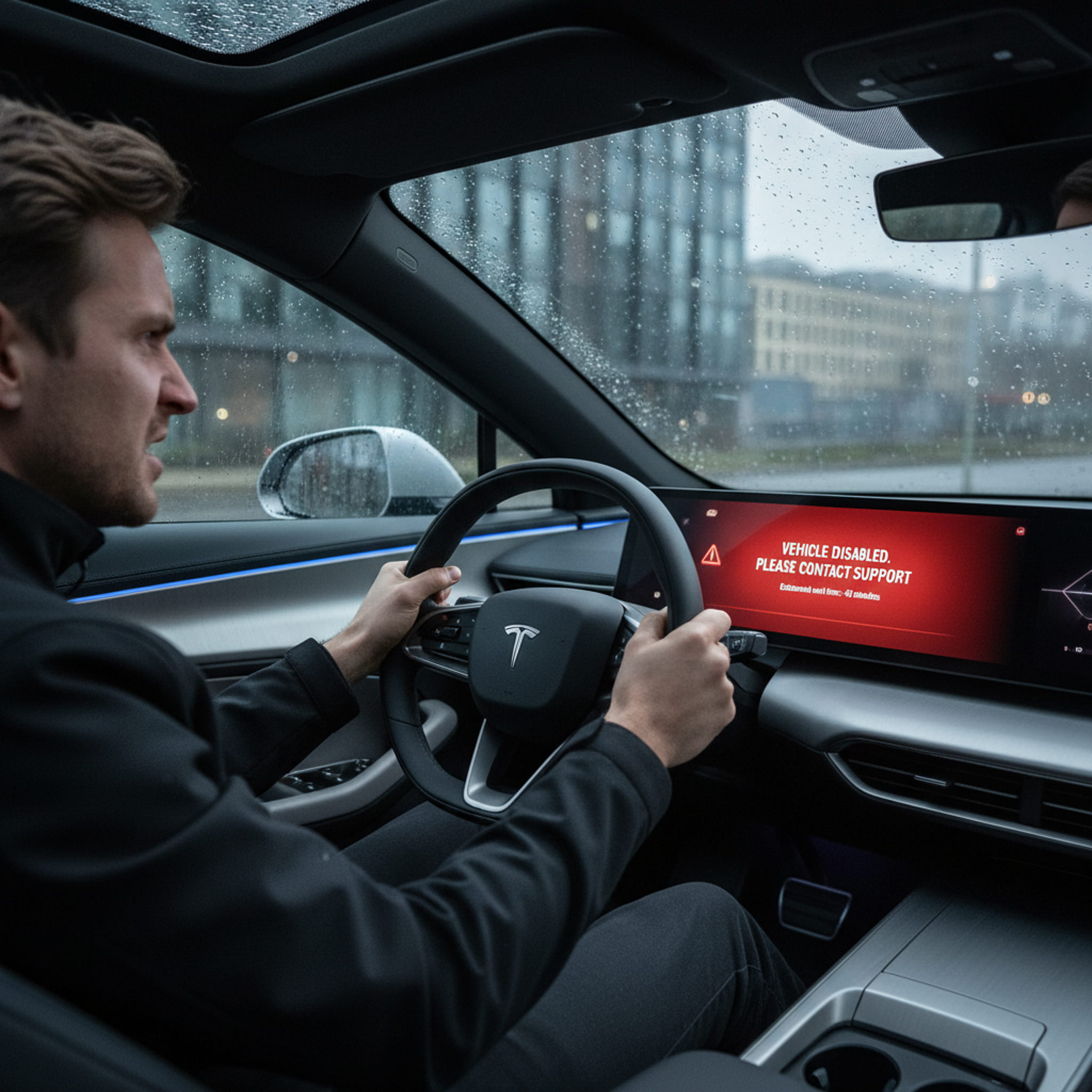
Will each manufacture handle this mandate in a completely different way? After detecting possible impairment, will the vehicle attempt to pull itself over while traveling at highway speeds? Could sudden intervention from the system actually create accidents instead of preventing them? What happens if the system falsely identifies a driver as impaired in heavy traffic, bad weather, or during an emergency situation? The law does not clearly define these scenarios, leaving both automakers and consumers with more questions than answers.
Privacy Concerns
Privacy concerns are also becoming impossible to ignore. Passive driver monitoring systems will likely rely on cameras, sensors, biometric readings, steering behavior analysis, facial recognition technology, or even breath-based detection systems. Many Americans are understandably uncomfortable with the idea of their vehicle constantly monitoring their physical state, facial expressions, eye movement, or behavior every time they get behind the wheel.
While the law mandates that the vehicle monitor the drivers and take action when it determines the driver, is unfit to drive it does not provide many details as to how that data is stored and if it can be accessed and by whom. There is no provision in the law explaining how drivers’ privacy rights are protected. This uncertainty is causing some to speculate that with today’s interconnected vehicles, this technology will give access to manufacturers as well as law enforcement to monitor and record your driving patterns, locations, voice and more... This invasive technology represents yet another erosion of personal privacy and individual freedom in the name of safety.
Reliability
Modern vehicles are already filled with highly complex electronic systems comprised of many modules, sensors and wiring that routinely fail, often requiring expensive diagnostics. The more tech we add to vehicles, the more costly they become to diagnose and repair. Not to mention the time it takes for a modern vehicle to be diagnosed and fixed has been steadily increasing. The time you are stuck without a car and forced to find alternative transportation methods. As these complex vehicles begin to age, they are likely to have more and more issues and adding another layer of complex monitoring hardware and software introduces even more opportunities for malfunctions, false positives, electrical failures, calibration issues and software glitches. Consumers will inevitably bear the cost of those repairs long after warranties expire.
Concern over the car falsely determining you are unfit to drive
Imagine a situation where someone enters their vehicle during a genuine emergency, perhaps rushing their pregnant wife to the hospital. Their heart rate is elevated, their hands are sweaty, their behavior appears stressed, and the system interprets those signals as impairment. If the vehicle disables ignition or limits operation because it mistakenly believes the driver is intoxicated, the consequences could be severe. These are not far-fetched hypotheticals; they are realistic scenarios that demonstrate the limitations of relying on automated behavioral interpretation.
Supporters of the legislation may argue that even imperfect systems can still save lives. However, it is important to point out that even a system functioning correctly 95% of the time still leaves millions of potential failures daily when scaled across the massive number of drivers across the entire country. With hundreds of millions of drivers and trips occurring regularly throughout the country, even a small percentage of false detections or system errors could impact tens of millions of people annually, preventing them from reaching their destination, stranding them unexpectedly, or creating dangerous roadway situations.
Additionally, these mandated systems can be a direct risk to driver’s lives. There have been multiple incidents when people used their vehicles to flee from potential danger. In a situation where someone must flee a location, either because they are being chased by someone intending to do them harm or for any other reason to ensure personal safety, it is important that they are able to rely on the vehicle to start and drive regardless of their biometric data. To inhibit a person’s right to ensure their personal safety is un-American and goes against the principles on which this country was founded.
Concerns over system effectiveness
There is also skepticism about whether this technology will significantly reduce impaired driving accidents at all. Determined offenders often find ways around safety measures, while law-abiding citizens are the ones most likely to deal with the inconvenience, repair costs, and unintended consequences of malfunctioning systems. Some critics believe these interventions could even create new types of accidents by introducing unpredictable vehicle behavior during critical driving situations.
At its core, the debate surrounding passive driver monitoring highlights a growing tension between safety regulation and personal freedom. We can all agree that drunk driving is dangerous and that reducing roadway fatalities is important. The disagreement lies in the legislator’s solution to the problem. Handing more control over to complex automated vehicle systems is not the right solution.
The Takeaway
With the advent of AI, we are making leaps and bounds into the future, and the truth of the matter is not all of them are positive. Until regulators provide clearer guidance about how these advanced systems are supposed to function and what happens to the data they collect and how it can be used, uncertainty and mistrust of the government will continue to grow.
The concern is not about new technology. A lot of recent automotive innovations have for the most part improved driver’s experiences while behind the wheel. It can be argued that for the most part modern touchless infotainment technology has made getting behind the wheel a more convenient and pleasant place to be all while improving safety. The concern and outrage stem from a growing belief that technology is being used to surveil, control and record our behavior by undisclosed corporate and government entities.
Read more articles