10 Legendary Engines That Carved Out Their Place in Automotive History
Valerie Raskovic
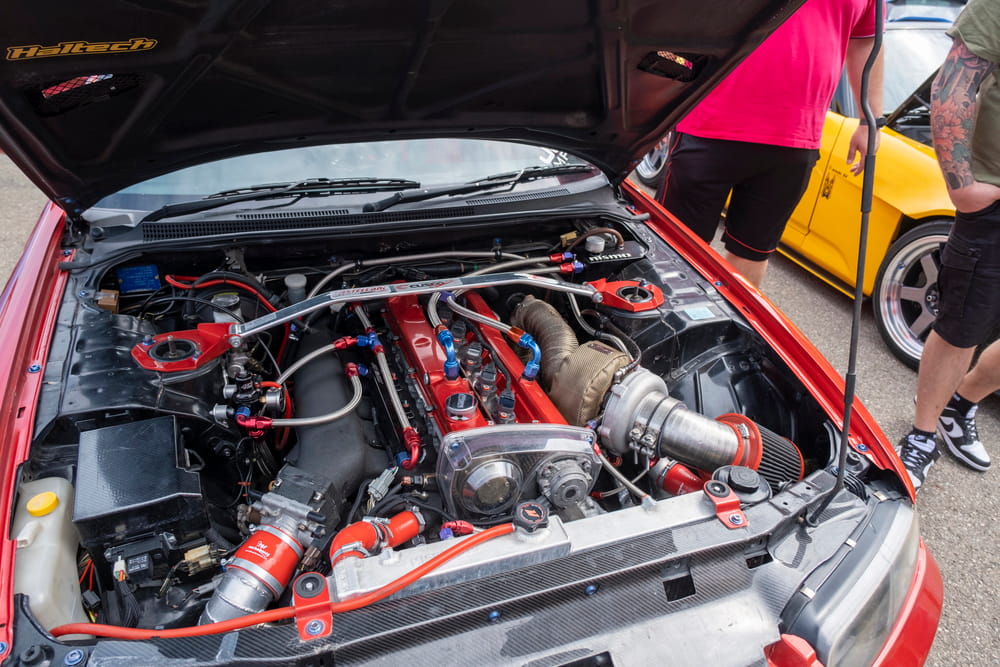
Ask ten car enthusiasts to name the greatest engines ever built and you'll probably get ten different answers. Some will argue for raw horsepower, while others value reliability, tuning potential, or the unmistakable sound an engine makes at full throttle. What separates a legendary engine from an ordinary one isn't just performance, as most car manufacturers deliver high-performance engines that will never make this list. Legendary engines offer unique characteristics that shape their reputation over many years and even decades. The best engines tend to inspire larger aftermarket support, power countless project cars, and remain desirable long after the vehicles they came in have disappeared from dealership lots.
Whether you're planning an engine swap, searching for a fun weekend car, or simply appreciate automotive engineering, these ten engines have become icons for good reason.
1. Toyota 2JZ-GTE
For many enthusiasts, no engine symbolizes built quality, reliability and unlimited tuning potential quite like the 2JZ-GTE. Built with an exceptionally strong iron block and forged internals, the inline-six-cylinder engine has become the benchmark for high-horsepower builds.
Found In
- The legendary Toyota Supra Mk IV 1993–1998, U.S.
- Toyota Aristo (Japan ONLY 1991-2004)
- Toyota Crown 1991-2003
- Toyota Soarer (Japan 1991-2000)
- Toyota Mark 2/Chaser/Cresta (Japan 1990-2001)
- Toyota Brevis/Progres (Japan, 1998-2007)
- Lexus GS 300 1993-2005
- Lexus IS 300 2000-2005
- Lexus SC 300 1992-2000
Why It's Legendary
- Handles enormous horsepower with relatively few internal upgrades.
- Smooth inline-six layout.
- Huge aftermarket support.
- Excellent long-term reliability.
Downsides
- Over the years it has become a bit expensive to purchase.
- Original engines are becoming harder to find.
- The cast iron construction is considerably heavier than similar aluminum engines.
2. Chevrolet LS Series
Few engines have transformed the hot-rodding world like GM's LS V8 family. Affordable, compact, lightweight, and incredibly reliable, LS engines have found their way into everything from Miattas to Ferraris.
Found In
- Chevrolet Corvette
- Camaro
- Silverado
- Tahoe
- GMC Sierra
- Cadillac CTS-V
- Saab 9-7x Aero
Why It's Legendary
- Compact dimensions.
- Massive aftermarket support.
- Excellent power per dollar, they tend to be a relatively inexpensive way to produce a lot of power.
- Easy to swap into countless vehicles.
- Most generations of the LS engines are considered relatively reliable.
Downsides
- Prices have risen considerably.
- LS-based truck engines often require upgrades for serious performance.
3. Honda K-Series
The K20 and K24 changed how enthusiasts viewed four-cylinder engines. With excellent cylinder head flow, high-RPM capability, and Honda's renowned reliability, the K-Series has become one of the world's favorite swap engines. With its variable valve timing “V-Tech”, a lot of K-series engines feel like motorcycle engines and product power at the higher end of the RPM range.
Found In
- Civic Si
- RSX Type-S
- Acura TSX
- Honda Accord
- CR-V
Why It's Legendary
- Incredible reliability.
- Excellent aftermarket support.
- Fun high-revving character.
- Lightweight aluminum construction.
- Light weight and compact dimensions
Downsides
- High-performance variants command premium prices.
- FWD layout can seriously complicate rear-wheel-drive conversions.
4. Nissan RB26DETT
Before the GT-R became a household name, the RB26DETT earned legendary status through motorsports and tuner culture. The RB is considered the direct rival to the legendary 2JZ and shares some of its unique characteristics like the inline layout and durability.
Found In
- Nissan Skyline GT-R R32
- Skyline GT-R R33
- Skyline GT-R R34
Why It's Legendary
- Smooth inline-six.
- Strong iron block.
- Incredible sound.
- Huge tuning potential.
Downsides
- Tends to be expensive.
- Import-only in many markets.
- Replacement parts continue to rise in cost.
5. Ford Coyote 5.0
Ford revived the Mustang's reputation with the modern dual-overhead-cam Coyote V8. Just like the GM-derived LS this engine is considered the blue colored hero, as it can be found in relatively affordable Ford models.
Found In
- Mustang GT
- F-150
- Some Australian Ford performance vehicles
Why It's Legendary
- High horsepower from the factory.
- Loves high RPM.
- Excellent reliability.
- Strong aftermarket.
Downsides
- Physically wider than an LS engine.
- Swap costs can be higher due to electronics and size restrictions.
6. Toyota 1UZ-FE
Before Lexus became famous for luxury, it quietly built one of the smoothest V8 engines ever produced. In the late 90’s and early 2000’s, Toyota and Lexus offered the 1UZ along with the 2JZ motors in a lot of the same models. For example, the best way to tell apart a V8 from an inline 6-cylinder 90’s or early 2000’s Lexus GS is to pay close attention to the number that came after the name. The 400 designation was specifically meant for the V8 version, while the 300 was designated for the 6-cylinder models. Regardless of which option was chosen, you know that the drivetrains in these vehicles may likely outlast you.
Found In
- Lexus LS400
- Lexus SC400
- Lexus GS400
- Toyota Crown
Why It's Legendary
- Exceptionally smooth.
- Bulletproof reliability.
- Aluminum construction.
- Handles boost surprisingly well.
Downsides
- Naturally aspirated power is modest.
- Limited aftermarket compared to 2JZ and LS engines.
7. Nissan SR20DET
The SR20DET powered an entire generation of turbocharged drift cars. This engine is renowned for its ability to hold boost while taking up a smaller footprint than its larger RB cousin.
Found In
- Nissan Silvia
- 180SX
- 200SX
- Pulsar GTI-R
Why It's Legendary
- Lightweight.
- Turbocharged from the factory.
- Great aftermarket support.
- Easy to modify.
Downsides
- Many engines have been abused.
- Good examples are becoming scarce.
8. Honda B-Series (B16/B18)
Long before the K-Series arrived, Honda's B-Series proved small displacement didn't mean small performance. While the B series does not offer the forged crankshaft, it is still considered an absolute darling in the aftermarket Honda tuning community. Just like its big brother, the K-Series, it is excellent at holding a lot of boost and is relatively inexpensive to build and repair.
Found In
- Civic Si
- Integra GS-R
- Integra Type R
- Civic Type R (Japan)
Why It's Legendary
- Incredible VTEC sound.
- Extremely reliable.
- High redlines.
- Excellent aftermarket support.
- Can still be found on the cheap.
Downsides
- Limited displacement.
- Performance builds often require higher RPM than torque-focused engines.
9. BMW S54
Many enthusiasts consider the S54 one of BMW's greatest naturally aspirated engines. It shares some of the amazing characteristics of the Toyota 2ZJ engine as they both have the same type of layout however, the BMW derived version is a bit lighter and it is not able to withstand the same amount of power on the stock block and internals as the 2JZ.
Found In
- E46 M3
- Z3 M Coupe
- Z4 M
Why It's Legendary
- Nearly 8,000 RPM redline.
- Incredible Linear throttle response.
- Exotic engine note.
- Outstanding engineering.
Downsides
- Higher maintenance costs.
- Rod bearing issues on some early engines.
- Expensive repairs.
10. Mazda 13B-REW Rotary
No legendary engine list feels complete without Mazda's rotary.
Unlike piston engines, the rotary uses spinning rotors instead of pistons, making it incredibly compact and capable of producing remarkable power from a small displacement. It is unlikely we will ever see another mainstream car with a factory-installed Rotary engine, so if you manage to get your hands on a good one, snag it on before they become unobtainable.
Found In
- Mazda RX-7 FD
- RX-7 FC (various versions)
- Cosmo
Why It's Legendary
- Extremely lightweight.
- Compact size.
- Unique screaming sound.
- Incredible power potential.
Downsides
- Apex seal wear, causing blow-by and oil consumption.
- Higher maintenance requirements.
- Fuel economy is poor.
- Not as forgiving as conventional piston engines.
Honorable Mentions
Several other engines deserve recognition for their impact on enthusiasts and the aftermarket.
- Subaru EJ257 – Boxer Engine Found in the Enthusiast’s Favorite Subaru WRX STI
- BMW B58 – Can be found in the modern Supra and BMW models (A90, M340i, Z4 M40i)
- GM LT Series – Modern successor to the LS family. Most of the LT Series share the same block as the LS and can be easily converted to LS variants.
- VW VR6 – A compact 6 cylinder that can be found in a variety of older VW models
- Toyota 3S-GTE – A 4-cylinder found in older Toyota Celica GT-Four, MR2 Turbo
- Mitsubishi 4G63T – Found in the legendary Lancer Evolution, Eclipse GSX
What Makes an Engine Legendary?
The engines that enthusiasts continue to celebrate tend to share a handful of traits: they're durable, respond well to modifications, have strong aftermarket support, and are found in regular vehicles.
The best engines also stand the test of time. Decades after they were introduced, people are still rebuilding them, swapping them into other cars, and pushing them to performance levels their designers likely never imagined.
Whether it's the near-indestructible Toyota 2JZ, the endlessly adaptable Chevrolet LS, or the screaming Honda K-Series, these engines have earned their reputations not through marketing, but through years of real-world performance. Their influence extends far beyond the vehicles they originally powered, and they continue to shape car culture around the world.
Read more articles
Post a comment
Popular Articles