Why More and More Drivers are Saying No to the Bells and Whistles and Choosing Simpler, No-Frills Vehicles
Valerie Raskovic
As with most things, the automotive industry has been moving primarily in one direction. Based on the old adage “innovate or get left behind”, car companies have been adding more technology, more screens, more software, and more features packed into every new vehicle, essentially turning cars and trucks into rolling computers. For years, car manufacturers worked to attract customers by adding everything from massive infotainment displays and advanced driver-assistance systems to electronically controlled suspensions and increasingly complicated engine management systems. For most traditional buyers, these advancements are welcome, but a growing number of drivers are starting to ask different questions: What direction is this going towards? Are cars being built to do the drivers job and at which point do they become nothing more than complex appliances?
This shift towards a more practical, no-nonsense approach to vehicle ownership is creating renewed interest in what could be called the "back to basics" market. These buyers are not necessarily opposed to technology. Most of these buyers simply do not want unnecessary complexity getting in the way of reliability, reparability, affordability, and long-term ownership.
At Which Point Does More Technology Become a Problem?
Modern vehicles are undeniably more advanced than their predecessors. They are equipped with advanced electronic safety systems that rely on a number of censors, cameras and modules to help prevent accidents. New technology has helped to increase fuel efficiency by introducing direct injection, start-stop function, cylinder deactivation, turbocharging and more. Additionally, new tech allowed for a new generation of voice-controlled connectivity features, heads-up displays, and other tech features, making every day driving more convenient. However, these improvements come with trade-offs that are becoming increasingly difficult for some owners to ignore.
A relatively minor problem in an older vehicle might involve replacing a mechanical switch, repairing a simple wiring connection, or swapping out an inexpensive component. In a modern vehicle, a similar issue can involve multiple control modules, software updates, specialized diagnostic equipment, and electronic components that must be programmed before they will work correctly.
Even features that seem relatively straightforward can introduce additional costs. Power-operated tailgates, electronic door handles, touchscreen climate controls, and sophisticated driver-assistance systems can all become expensive repair items as a vehicle ages. When multiple systems depend on interconnected electronics, diagnosing a problem can become increasingly difficult. Repairing that problem can also be more difficult simply because newer cars may involve more disassembly to be able to get to the faulty component because as the companies build new cars, they tend to be optimized more for assembly and packaging rather than ease of repairability.
There is also the question of longevity. There are actually buyers out there who intend to keep a vehicle for 10, 15, or even 20 years and they are looking to buy something that will stand the test of time. The issue with most modern cars is that mechanical durability is only part of the equation. A well-built engine and transmission are valuable, but so is the ability to keep the rest of the vehicle operational without facing expensive electronic failures or discontinued replacement parts.
While older vehicles have their own disadvantages, including corrosion, aging rubber components, outdated safety technology, and less efficient engines, they tend to have a more predictable long-term cost of ownership. The goal is not necessarily to return to the vehicles of the 1980s and 90s. Rather, it is to find a better balance between modern engineering and practical simplicity.
Who is These Back-to-Basics Buyers?
The appeal of simpler vehicles extends beyond any single demographic. Some buyers want the vehicle for a single purpose, so it really does not need to be luxurious and full of tech. Small-business owners, contractors, farmers, outdoor enthusiasts, rural drivers, and budget-conscious families may all have different reasons for wanting a more utilitarian vehicle.
For a contractor and business owner, a truck or a van is viewed more as a tool needed to generate revenue. Its primary role is to haul equipment, handle demanding conditions, and remain reliable and easy to repair. A complicated infotainment system or a collection of luxury features may have little impact on its usefulness and perceived value to this demographic. If an electronic component fails and puts the vehicle out of service, that failure can directly affect the owner's income, thus vehicles with fewer failure points are commonly preferred by contractors and businesses alike.
The same principle applies to people who partake in the recreational or professional activity involving travel far from populated areas. Drivers who regularly take their vehicles off-road and venture into remote locations may prefer vehicles with fewer systems that can malfunction far from a repair facility. They may also value physical controls, straightforward maintenance procedures, and components that independent mechanics can repair without manufacturer-specific tools and software access.
Another group consists of budget-minded consumers who simply want to escape the rising cost of vehicle ownership. New vehicles have become increasingly expensive, and buyers are facing not only higher purchase prices but also potentially costly repairs, insurance premiums, and replacement expenses. For these consumers, paying extra for technology they rarely use can feel like an unnecessary burden.
There is also a growing segment of hobbyists and die-hard car enthusiasts that do not want to lose the analog connection to the vehicle they own. These drivers want to feel that they own and control their vehicles rather than depend on software, subscriptions, and manufacturer-controlled systems to access basic functions. A lot of these consumers also want to be free to work on their own cars without the need for costly and complicated dealer-only tools, specialized diagnostic equipment and software restrictions.
The Opportunity for Automakers and Smaller Manufacturers
The challenge for the automotive industry is that most major manufacturers are competing to see who can stuff more tech features in the car in order to complete with each other and be able to justify higher prices. Developing a genuinely simpler vehicle may therefore seem commercially unattractive to companies accustomed to selling increasingly sophisticated products year after year. Nevertheless, there is an opportunity for manufacturers willing to serve buyers whose priorities are different.
The important thing to remember is that most consumer demand for simplicity is not driven by some nostalgia of the past. There is no push to do away with air conditioning and power doors. Consumers want the vehicle to retain essential modern features, reliable fuel injection, effective emissions controls, air conditioning, and dependable electronic systems while avoiding unnecessary layers of complexity. Overwhelmingly, drivers opt for more physical climate controls over touch screen and haptic feedback systems. Consumers want some of the car manufacturing budget to be directed towards using more durable interior materials, easily serviced components, and a straightforward electrical architecture that does not require a degree in electrical engineering to troubleshoot.
To make a good overall vehicle, the manufacturer should not simply consider what is best for now but consider the entire ownership experience. Affordable replacement parts, accessible repair information, reasonable diagnostic requirements, and long-term parts availability could be as important to these buyers as horsepower or fuel economy. It is vital that companies step up to the plate and provide what a growing number of vehicle buyers want.
Companies such as Slate are attempting to do just that. While Slate is a full electric car company, known for its proposed minimalist multipurpose electric pickup, they work to provide growing back to basic consumer demand. The brand puts a lot of effort into making sure their vehicles can be easily customized for a multitude of utilitarian uses. They want to capture the market looking for practical utility and a less feature-heavy approach. Its concept challenges the assumption that every new vehicle must offer an ever-expanding collection of luxury features and digital conveniences. Although it may seem surprising that one of the companies stepping up to meet this demand is an electric vehicle manufacturer, simplicity isn't exclusive to traditional gas-powered vehicles. An EV can also offer a more straightforward, no-frills approach to ownership, proving that practicality and simplicity are not defined by what powers the vehicle.
Slate's truck relies on power electronics, battery-management systems, software, and other sophisticated technology; however, it removes anything unnecessary to its basic function. Its approach is more accurately understood as an effort to simplify the EV ownership experience and reduce unnecessary features, rather than eliminate electronics altogether. The back-to-basics movement is not necessarily about rejecting technological progress. It is about deciding which technologies genuinely improve a vehicle for its intended purpose and which primarily add unnecessary cost, complexity, or potential long-term issues.
Can Simplicity Actually Make Vehicles More Affordable?
In theory, reducing unnecessary features can lower manufacturing costs, simplify certain repairs, and make a vehicle more accessible to buyers who do not need a luxury experience. However, achieving meaningful savings is more complicated than simply removing a touchscreen or eliminating power seats.
Automakers are under a lot of pressure to meet and exceed safety standards, emissions requirements, cybersecurity expectations, and increasingly demanding crash-protection standards. Modern vehicles also require extensive engineering and testing, even when their final designs appear relatively basic.
Packaging is an issue that is seldom discussed, as it is part of the greater engineering segment; however, it has a huge impact on vehicle repairability and long-term ownership costs. The issue is that engineers are not in full control of how the vehicle is engineered and built. Many car companies direct their inhouse engineers to design vehicles based on strict guidelines derived by cost optimization and packaging goals. While building a vehicle heavily influenced by packaging and cost constraints may not have any immediate consequences, it does tend to make the long-term ownership of these modern vehicles a bit more problematic.
Even if the price of car components does not change, the actual labor hours to replace them tend to get longer and longer. For example, to replace spark plugs on a 2003 Jeep Grand Cherokee with a 4.0L 6-cylinder engine should take roughly around 30 minutes, while the same procedure on a 2022 model with the 3.6 V6 Pentastar will take you anywhere from 1.5 to 3 hours. This is not exclusive to the Jeep brand; service and repair times are up across all brands and types of modern vehicles.
The real challenge for automakers today is to be able to deliver a vehicle that combines an affordable purchase price with reasonable operating costs, dependable components, and a long useful life. Consumers will ultimately judge these vehicles by their total cost of ownership, not by the number of touch screens and buttons on the dashboard.
A Small Market Today, but One Worth Watching
The back-to-basics segment remains a relatively small part of the broader automotive market, and it is difficult to determine its true size. Buyers express frustration with complicated vehicles but still choose conventional models because of their safety features, comfort, performance, or resale value. Others simply purchase used vehicles because they cannot afford the latest models.
However, what is undeniable is the fact that in the last few years we have seen a huge spike in Lemon law claims and warranty lawsuits. Most sued brands include General Motors (Chevrolet, Cadillac, Buick, GMC), Stellantis (Jeep, Dodge, Chrysler Ram), Ford and Tesla. It appears that there is a growing backlash from car buyers. As vehicles become more complex and harder to repair and service, an increasing portion of the market will inevitably place greater value on simplicity, repairability, and long-term practicality.
The Bottom Line
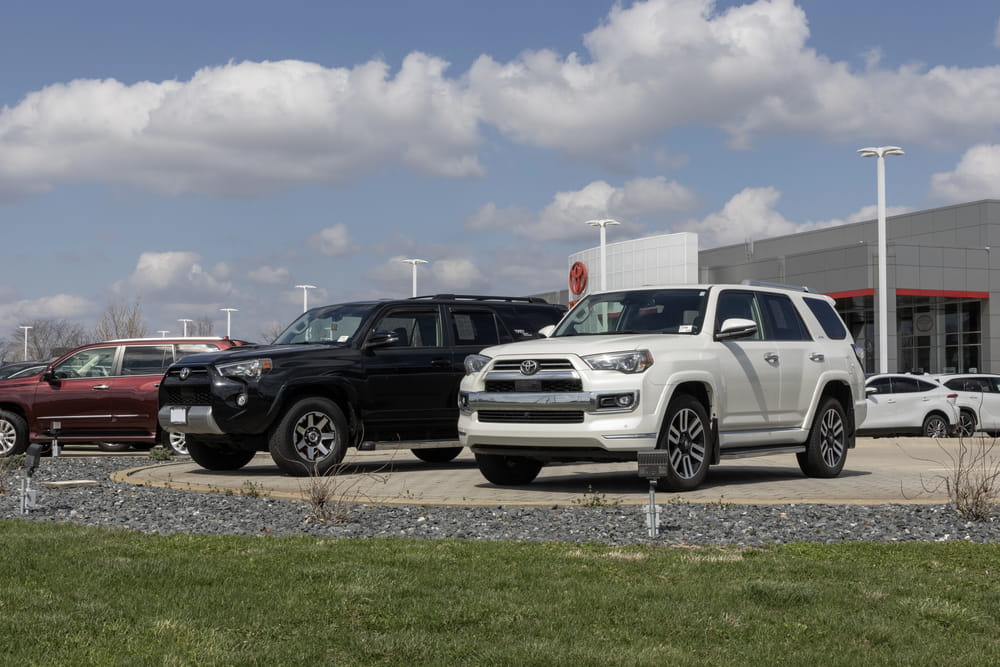
The automotive industry has spent decades convincing consumers that newer, smarter, and more feature-packed vehicles are inherently better. For many drivers, that is still true. But a growing number of buyers are beginning to place a higher value on something that can stand the test of time. This can already be seen the form of increasing resale values for legendary reliable vehicles such as the 5th generation Toyota 4Runner and the Tacoma. This goes to show that many consumers value simplicity, low cost of ownership, and reliability more so than advanced new technology. A vehicle that does what it is supposed to do without making ownership unnecessarily complicated is always going to be worth more on the used car market than one that requires complicated upkeep.
Whether the back-to-basics movement becomes a substantial market segment remains to be seen. But manufacturers should not dismiss it simply because it challenges the industry's prevailing direction. In a market where vehicles are becoming more expensive and repairs increasingly complicated, simplicity itself could become a selling point.
Read more articles
Post a comment
Popular Articles
Why More and More Drivers are Saying No to the Bells and Whistles and Choosing Simpler, No-Frills Vehicles
The Hidden Truth About the Collision Repair Industry and Why a Shiny Paint Job Doesn't Always Mean a Properly Repaired Car
Is The New Jaguar Type 01 the Future of Electric Cars?

What Is a Pink Slip and Why Is It So Important?
How Your BMW VIN Can Reveal More About the Vehicle