Chinese BYD Vehicle manufacturer giant is knocking on America's door
Valerie Raskovic
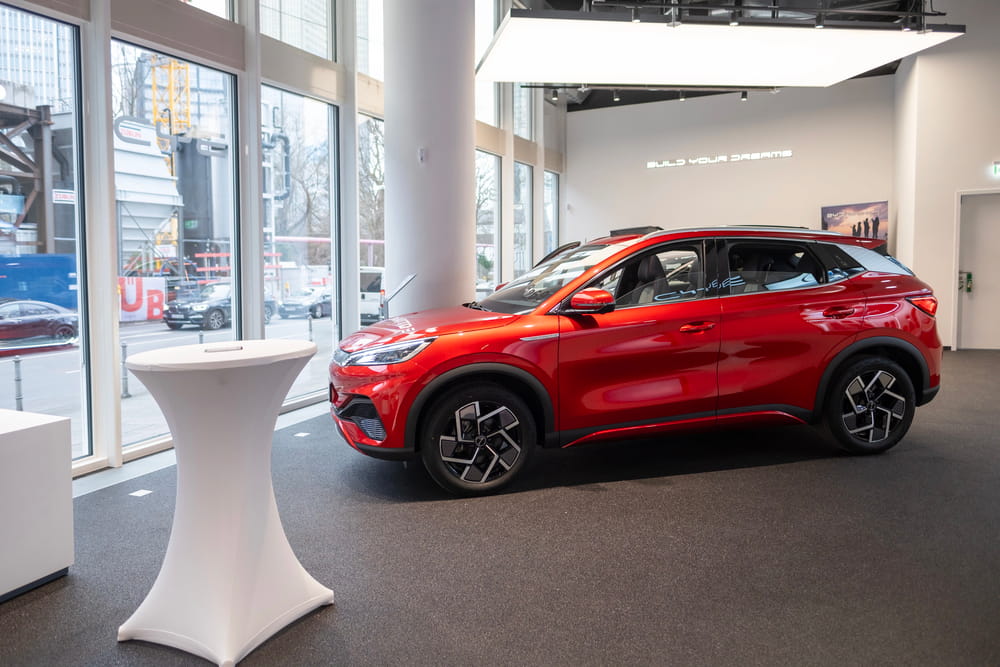
For years, American car buyers have been captivated by Tesla's sleek designs and ambitious promises. But while Elon Musk was making headlines sticking his nose in the American political process, a quiet giant was rising in China. BYD has been building what would become the world's largest electric vehicle empire. While most automotive manufacturers have great success in foreign markets, they are effectively locked out of bringing their products to the US. Due to high tariffs, emissions and safety laws, as well as other local regulations, breaking into the US auto market has become a herculean undertaking. However, through all the challenges, BYD has still found a way to the US auto market and this is just the beginning.
From Battery Maker to EV Juggernaut
The story of BYD begins not with cars, but with batteries. Founded in 1995 as a Chinese based rechargeable battery manufacturer, BYD (which stands for "Build Your Dreams") spent its first decade perfecting the technology that would eventually power the electric vehicle revolution. This vertical integration strategy, controlling everything from battery cell production to final assembly, would prove to be the company's key to world markets.
The real turning point came in 2008, when Warren Buffett's Berkshire Hathaway invested $232 million for a 10% stake in the company. It was Charlie Munger, Buffett's longtime partner, who championed the investment, calling BYD's founder Wang Chuanfu "a combination of Thomas Edison and Jack Welch." That investment, which Buffett exited in 2025 after 17 years, grew more than twentyfold and provided BYD with both capital and credibility on the global stage.
The Tesla Slayer
While Tesla was capturing hearts with luxury EVs, BYD was quietly executing a different strategy. They made affordable electric transportation for the masses. The approach paid off spectacularly. In 2024, BYD delivered over 4.27 million new energy vehicles, solidifying its position as the world's largest EV manufacturer by volume. The company didn't just beat Tesla; it lapped it, selling more electric vehicles in a single year than many traditional automakers sell across their entire fleets.
The key to BYD's success lies in its manufacturing philosophy. By producing nearly every component in-house, from battery cells to semiconductors, BYD can offer electric vehicles at price points that Western manufacturers struggle to match. The BYD Seagull, a compact electric car, sells for under $10,000 in China.
The Brilliant Strategy- Prioritizing Partnerships over Competition
With trade tensions between Washington and Beijing at their highest point in decades and American policymakers increasingly wary of the impact Chinese companies can have on US markets, BYD can't simply set up dealerships and start selling cars in the US. Instead, the company has adopted a more subtle approach through strategic partnerships with US auto manufacturers.
While most US car shoppers may not be familiar with the brand BYD, products have already landed on showroom floors. Rather than selling directly to consumers, BYD is positioning itself as the backbone of America's transition to vehicle electrification and ride-share industries.
Multiple US manufactures, including Ford, have made deals with BYD to provide batteries and EV tech that is being installed in vehicles on the US market now. In 2024 BYD made a deal with Uber for 100,000 BYD vehicles to be added to the rideshare platform in parts of Europe and Latin America. While these vehicles are unlikely to make it onto US soil, this partnership with a major US company represents a clever end-run around American retail sales restrictions.
Industrial Trucks
While passenger vehicles get most of the attention, they tend to be the most regulated, making the process of setting up shop in the states nearly impossible. However, BYD found another unexplored avenue through heavy truck electrification. The company has been quietly building a significant presence in America's commercial vehicle market. The company's partnership with Anheuser-Busch, which began in 2019, has already resulted in the deployment of over 100 electric trucks in the United States, including what was then North America's largest fleet of Class 8 electric semi-trucks.
This commercial-first strategy mirrors the approach Chinese companies have taken in other industries: establish a foothold in business-to-business markets where purchasing decisions are based on economics rather than nationalism. The bigger plan is to first set up the infrastructure and build relationships that will likely allow the brand to eventually expand into consumer markets.
The American Challenge
BYD's path to American market dominance is far from guaranteed. The company faces significant hurdles, including 27.5% tariffs on Chinese-made vehicles, restrictions on federal tax credits for Chinese EVs and growing political opposition to Chinese technology companies.
Yet BYD's partnerships with American companies suggest a different path forward. Rather than trying to sell Chinese-made cars to American consumers, BYD is embedding itself in the American economy through partnerships that create jobs and economic value stateside. The company has already announced plans to establish manufacturing operations in Mexico, potentially allowing it to circumvent some tariffs while still leveraging its Chinese supply chain expertise.
BYD’s place in the EV evolution
As the electric vehicle revolution is entering its next phase, BYD is positioning itself to become a world leader, betting that affordability and practicality will be the driving force behind mass adoption. If they're right, the American automotive landscape could look very different in just a few years.
Read more articles