Understanding the differences between gasoline and Diesel fuels
Valerie Raskovic
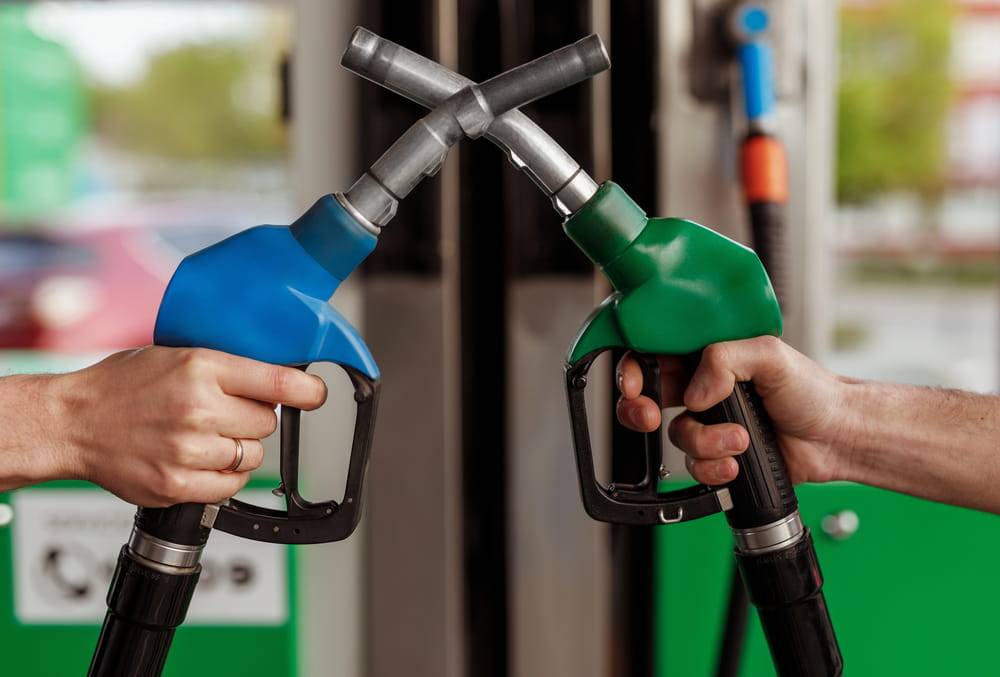
Understanding the differences between gasoline and diesel fuels can save you from a massive engine repair or even replacement bill. While both fuels are readily available at most US gas stations, the difference between them is like oil and water.
If you are ever faced with the question “diesel or regular”, it is vital for you to make the right decision, as these fuels are not interchangeable. There have been cases of people with conventional gasoline engine cars grabbing the green nozzle by mistake and paying the consequences. It will not take long for the effects of the mix-up to make their presence known. Within just a few miles of leaving a gas station, the engine will start sputtering and will eventually come to a stop. The engine was making sounds that would make a mechanic weep. This very costly mistake is often made based on a simple assumption: fuel is fuel, right?
Nothing could be further from the truth. While diesel and gasoline both originate from the same crude oil, they are uniquely different. Understanding these differences isn't just academic knowledge; it can save you from catastrophic engine damage that could potentially total your vehicle.
The Chemistry
At the molecular level, diesel and gasoline are fundamentally different fuels. Diesel molecules contain 12-20 carbon atoms per molecule, making them longer and heavier than gasoline molecules, which typically contain 5-12 carbon atoms. This seemingly minor difference creates a cascade of properties that make the fuels completely incompatible.
Diesel fuel is oilier and more viscous; in fact, it has a consistency more closely resembling lightweight motor oil than gasoline. It also has a higher energy density, with about 15% more energy per gallon than gasoline. The main difference is that diesel requires completely different conditions for combustion. While gasoline ignites with the use of ignition/spark, diesel does not need an ignition source; it requires intense compression and heat to burn.
The octane rating for diesel (similar to octane for gasoline) measures how quickly the fuel ignites under compression. Diesel typically has an octane rating of 40-55, while gasoline's octane rating measures its resistance to ignition. This fundamental difference in how the fuels react to compression and heat makes them impossible to use interchangeably.
Gasoline engines operate on the Otto cycle, named after Nikolaus Otto, who developed the four-stroke engine in 1876. These engines compress a mixture of air and gasoline, then use a spark plug to ignite it at precisely the right moment. The combustion happens quickly and evenly, creating a controlled explosion that pushes the piston down.
Diesel engines work on the Diesel cycle, developed by Rudolf Diesel in 1893. These engines compress only air, raising its temperature to around 1,000°F. When diesel fuel is injected into this superheated air, it ignites spontaneously from the pressure and heat; no spark plug is required. This compression ignition requires much higher compression ratios (16:1 to 23:1) compared to gasoline engines (8:1 to 12:1).
The fuel injection systems reflect these differences. Gasoline engines mix fuel with air before it enters the cylinder, while diesel engines inject fuel directly into the compressed air at precisely timed intervals. This difference requires completely different fuel delivery systems, with diesel injectors needing to withstand much higher pressures—up to 30,000 PSI compared to 40-60 PSI for gasoline injectors.
The Catastrophe that follows after introducing diesel fuel to a gasoline engine.
- The first problem that your vehicle will encounter relates to the difference in fuel viscosity. Since diesel is thicker than gasoline, it won't flow properly through the fuel system designed for lighter fuel. The fuel pump struggles to move the viscous diesel, potentially burning out from the resistance caused by the elevated pressure in the lines.
- Fuel injectors designed for gasoline's flow characteristics can't atomize diesel properly, resulting in poor spray patterns that prevent proper combustion.
- However, the biggest problem will come when the gasoline engine tries to burn diesel; it simply won't ignite. The fuel floods the cylinders, washing away the oil film that protects cylinder walls and intense pressure from the fuel remaining in the cylinder as the engine spins is likely to cause catastrophic metal-to-metal contact that could absolutely destroy the engine’s internals.
- The damage is likely to escalate rapidly. Unburned diesel dilutes the engine oil, reducing its lubricating properties and potentially causing bearing failure. Fuel system components designed for gasoline's solvent properties become clogged with diesel's oily residue. Repair costs typically range anywhere from $500 when caught early before the fuel enters the engine and may easily exceed $5,000 if the engine is damaged.
The devastating effects of adding Gasoline to a Diesel Engine.
- The first system that will be affected relates to fuel delivery. Diesel engines rely on diesel fuel as a lubricant for high-pressure fuel pumps and injectors. Gasoline lacks these lubricating properties, causing metal components to grind against each other at pressures exceeding 20,000 PSI. The result is often immediate and expensive fuel system failure. High-pressure fuel pumps can seize within minutes, sending metal shavings throughout the fuel system.
- When injectors designed for diesel's combustion attempt to ignite gasoline, they will often create uncontrolled detonation that can crack pistons or damage connecting rods and even crack the engine.
- Modern diesel engines with common-rail fuel systems are particularly vulnerable. These systems operate at very high pressures, in some cases up to 30,000 PSI and have extremely tight tolerances. Introducing gasoline to these fuel systems can destroy these components in seconds and cause secondary damage to other components by allowing debris to circulate through the engine and other vital vehicle components. Repair costs often exceed $10,000; in some cases, the cost of repairing this damage can be greater than the value of the car, effectively totaling the vehicle.
Real-World Consequences
According to AAA, misfueling incidents occur approximately every 3 minutes in the United States, with diesel-in-gasoline mistakes being slightly more common than the reverse. The average repair cost for this mistake hovers around $8,500.
If you think you can get away with having your insurance company cover the bill, you will be very disappointed to know that most insurance companies are increasingly denying claims for misfueling damage. Insurance companies consider this a driver error rather than a regular loss event. This leaves vehicle owners on the hook for the hefty repair bill. This is the reason that many vehicles with misfueling damage are declared total losses, particularly older vehicles where repair costs exceed market value.
Simple ways to prevent misfueling
- The most effective prevention is awareness. Keep an eye out for the pump handle color. Diesel pumps are usually green and clearly labeled, but standards vary between stations and countries. When in doubt, stop and verify.
- Modern vehicles include several features designed to prevent misfueling. Diesel pumps typically have larger nozzles that won't fit gasoline filler necks, though determined drivers can still force them. If you feel the fuel nozzle is too big for your filler hole, do not attempt to force it in and check to make sure you are using the correct fuel type.
- If you realize your mistake before starting the engine, whatever you do, do not start the engine. Have the vehicle towed to a service center where the wrong fuel can be drained and the fuel system cleaned.
Knowledge Can Save Thousands
Understanding the difference between diesel and gasoline isn't just mechanical trivia; it's essential knowledge that can save you from financial disaster. These fuels are engineered for completely different combustion processes and using them interchangeably will destroy expensive components faster than you can say "premium unleaded." The next time you're at the pump, take an extra 30 seconds to verify you're using the right fuel. Your engine—and your bank account—will thank you.
Read more articles
Post a comment
Popular Articles